

Comparison of Aluminum PCBs vs. FR4 PCBs Across 6 Aspects
When engineering electronic hardware, defaulting to standard fiberglass boards out of habit is a costly mistake. Modern electronics demand precision, particularly as components shrink in size while their power outputs skyrocket. If you are designing high-intensity LED arrays, power converters, or automotive systems, the substrate you choose dictates whether your product survives in the field or fails catastrophically due to thermal overload.
To make an informed commercial decision, you must understand the direct Comparison of Aluminum PCBs vs. FR4 PCBs Across 6 Aspects. In this guide, we will strip away the generic advice and evaluate these substrates based on practical, real-world manufacturing realities. We will explain not only what these boards are, but whether it is actually worth using, buying, or upgrading to metal-core technology for your specific application.
Quick Answer
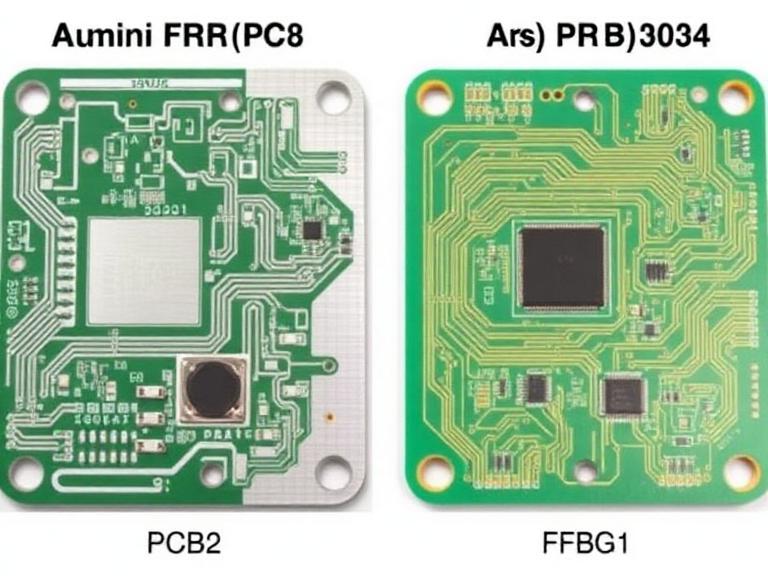
The core difference between Aluminum PCBs vs. FR4 PCBs lies in thermal conductivity and structural rigidity. FR4 PCBs are made of woven fiberglass and epoxy resin; they are excellent electrical insulators but poor thermal conductors, making them ideal for complex, multi-layer digital circuits. Aluminum PCBs (Metal Core PCBs) feature a solid aluminum base layer that acts as a highly efficient heat sink. They dissipate heat up to 10 times faster than FR4, making them mandatory for high-power LED lighting, automotive power modules, and heavy-duty industrial applications where heat management is the primary engineering constraint.
Table of Contents
- What It Is and How It Works
- Aspect 1: Thermal Management
- Aspect 2: Cost and Manufacturing Complexity
- Aspect 3: Mechanical Durability and Rigidity
- Aspect 4: Layer Count and Routing Density
- Aspect 5: Weight and Form Factor
- Aspect 6: Environmental Resistance
- Who Should Use It vs. Who Does Not Need It
- Common Mistakes in PCB Selection
- Buying Considerations
- Expert Recommendation
- Essential Comparison Tables
- The Bottom Line
- Frequently Asked Questions (FAQs)
What It Is and How It Works
FR4 PCBs represent the industry standard. FR4 stands for Flame Retardant 4. The material is a composite of woven fiberglass cloth bound with an epoxy resin. Copper foil is laminated to one or both sides, or embedded between multiple layers. Its primary function is to provide a rigid, electrically insulating platform for mounting electronic components and routing signals.
Aluminum PCBs, also known as Metal Core PCBs (MCPCBs), consist of three distinct layers. The base is a thick layer of aluminum (typically 1.0mm to 3.0mm thick). Above the aluminum is a highly specialized, thermally conductive but electrically insulating dielectric layer. The top layer is standard copper foil for circuit routing. How it works is simple but highly effective: the components generate heat, the heat passes through the thin dielectric layer instantly, and the massive aluminum base spreads the heat out and transfers it to the ambient air or an external chassis.
Aspect 1: Thermal Management (The Deciding Factor)
In most professional situations involving power electronics, heat is the enemy. FR4 is fundamentally a thermal insulator. Standard FR4 has a thermal conductivity of roughly 0.25 to 0.3 W/m-K. If you mount a high-power component on FR4, the heat gets trapped, component junctions exceed their maximum temperature ratings, and the device fails prematurely.
Aluminum PCBs operate in an entirely different league. The dielectric layer in a standard Aluminum PCB boasts a thermal conductivity ranging from 1.0 to 3.0 W/m-K (and higher in premium grades). This allows an Aluminum PCB to dissipate heat nearly 10 times more effectively than FR4. For heavy-duty applications, this eliminates the need for bulky external heatsinks, cooling fans, and thermal paste.
Aspect 2: Cost and Manufacturing Complexity
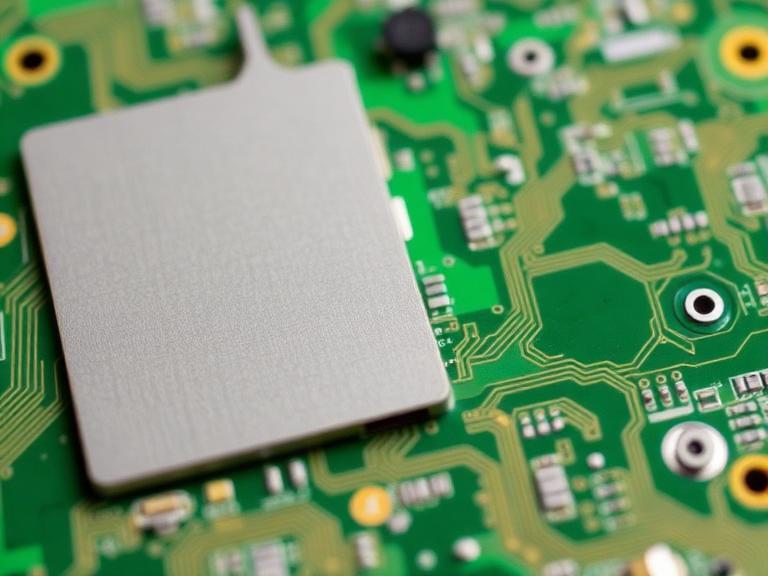
FR4 is a commodity. Because it is universally adopted, the raw materials are cheap, and the manufacturing process is highly standardized. If you need a standard 2-layer or 4-layer logic board, FR4 will always be the most economical choice. You can easily find low cost PCB manufacturers globally capable of producing FR4 boards rapidly.
Aluminum PCBs have a higher raw material cost and require specialized tooling (stamping and routing metal dulls standard drill bits rapidly). However, commercial buyers must look at the total system cost. If upgrading to Aluminum allows you to remove a $2.00 extruded aluminum heatsink, a $0.50 fan, and the labor required to assemble them, an Aluminum PCB actually lowers your overall product cost despite the bare board being more expensive.
Aspect 3: Mechanical Durability and Rigidity
FR4 is strong, but under extreme thermal cycling or physical stress, it can warp, bend, or crack. Delamination (where the layers separate under high heat) is a known risk in poorly fabricated FR4 boards.
Aluminum PCBs are practically indestructible in standard operating environments. The solid metal core provides exceptional dimensional stability. It does not warp under severe heat, making it ideal for environments subjected to intense physical vibrations, such as industrial motor drives or automotive chassis systems.
Aspect 4: Layer Count and Routing Density
This is where FR4 dominates. Because FR4 is an insulator through and through, you can stack 8, 16, or even 32 layers of copper and fiberglass together. This allows for incredibly dense routing, which is mandatory for smartphones, motherboards, and complex microprocessors.
Aluminum PCBs are generally restricted to a single layer of copper on top of the dielectric. While 2-layer and multi-layer Aluminum PCBs exist, their manufacturing complexity and cost skyrocket. You must drill through the aluminum, fill the hole with insulation, and plate it. Therefore, Aluminum PCBs are rarely used for dense, complex digital signal routing.
Aspect 5: Weight and Form Factor
Volume for volume, aluminum is significantly heavier than fiberglass. If you are designing a lightweight drone or a wearable medical device, the weight of an Aluminum PCB is a severe limitation. FR4 is the standard for anything requiring a lightweight footprint.
However, as mentioned in the cost analysis, if an Aluminum PCB allows a designer to eliminate heavy, bolted-on external thermal management hardware, the overall assembled product might actually achieve a smaller, lighter form factor.
Aspect 6: Environmental Resistance
FR4 can absorb moisture over time in highly humid environments, which can slightly alter its dielectric constant and lead to electrical leakage if not properly conformal coated.
Aluminum, naturally, does not absorb moisture. Furthermore, the solid metal backing provides inherent shielding against electromagnetic interference (EMI) originating from behind the board, a useful trait in noisy industrial power supplies.
Who Should Use It vs. Who Does Not Need It
For commercial users engineering high-power systems: You must use Aluminum PCBs for street lighting, automotive headlights, power converters, solid-state relays, and motor controllers. Attempting to cool these systems on FR4 using thermal vias is inefficient and prone to failure.
For beginners and designers of standard logic circuits: You do not need Aluminum PCBs. If you are designing a smart home sensor, an audio amplifier logic board, or a Wi-Fi router, FR4 is the undisputed king. It provides the routing density you need at a fraction of the cost.
Common Mistakes in PCB Selection
In our testing, the most common engineering mistake is trying to force FR4 to act like a metal core board. Designers will place a high-power LED on FR4, drill hundreds of "thermal vias" under the component, and hope it transfers heat to the back of the board. This process drastically weakens the structural integrity of the FR4 and provides only mediocre thermal relief. If a component generates enough heat to require extensive thermal vias, you should have upgraded to an Aluminum PCB.
Another mistake is failing to specify the thermal conductivity of the dielectric layer when ordering Aluminum PCBs. Not all metal core boards are created equal. If you buy the cheapest Aluminum PCB, the dielectric layer may only perform at 1.0 W/m-K, bottlenecking your heat transfer.
Buying Considerations
When approaching pcb manufacturing companies worldwide, you must scrutinize their capabilities. For FR4, check their capability to handle high TG (Glass Transition Temperature) materials if your board runs warm. For Aluminum PCBs, demand transparency on the dielectric material specification. Ask your supplier: What is the exact W/m-K rating of the dielectric? Can you handle heavy copper weights (2oz, 3oz) on the top layer to handle high current?
Expert Recommendation
From our experience as one of the leading pcb board makers China, we recommend approaching material selection with a system-level mindset. Do not just look at the bare board cost.
Wintech is a full turnkey service, high-mix, low to mid volume electronics manufacturing and custom material solutions provider with a proven track record. We provide tailor-made solutions for our customers: high level, high difficult, large size, complex structure, and high precision PCB Layout. When clients come to us struggling with thermal throttling on FR4, we immediately audit their design for an Aluminum PCB conversion. Many of the world's top 500 enterprises have cooperated with us for many years because we engineer out the risk. You can learn more about our rigorous standards by reviewing the Wintech PCB company profile.
Essential Comparison Tables
| Feature | Aluminum PCB (MCPCB) | FR4 PCB |
|---|---|---|
| Primary Use Case | High-power lighting, power supplies | Digital logic, multi-layer circuits, IoT |
| Thermal Conductivity | Excellent (1.0 to 3.0+ W/m-K) | Poor (~0.3 W/m-K) |
| Standard Layer Count | 1 Layer (rarely 2) | 2 to 16+ Layers |
| Mechanical Rigidity | Exceptional | Good, but can warp under high heat |
| Application Type | Recommended Substrate | Why? |
|---|---|---|
| High-Power LED Arrays | Aluminum PCB | LEDs degrade rapidly with heat. Aluminum prevents thermal burnout. |
| Computer Motherboards | FR4 PCB | Requires dense routing and 8+ layers, which is impossible/cost-prohibitive on Aluminum. |
| Motor Controllers (High Current) | Aluminum PCB | Dissipates intense heat from MOSFETs switching high loads. |
| Wearable Electronics | FR4 PCB / Polyimide | Requires absolute minimum weight and thickness. |
| Substrate | Pros (Advantages) | Cons (Limitations) |
|---|---|---|
| FR4 PCBs | Low cost, excellent electrical insulation, supports massive layer counts, lightweight, universally manufactured. | Terrible thermal dissipation, prone to thermal mechanical stress, limited high-power capability. |
| Aluminum PCBs | Superior heat dissipation, exceptional structural rigidity, eliminates external heatsinks, EMI shielding. | Heavier, limited to low layer counts (usually single-sided), higher raw material cost. |
| Specification Parameter | What to specify for FR4 | What to specify for Aluminum |
|---|---|---|
| Material Grade | Tg Value (e.g., Tg 150, Tg 170) | Thermal Conductivity (e.g., 2.0 W/m-K) |
| Copper Weight | 1oz to 2oz standard | 1oz to 4oz (for high current paths) |
| Base Thickness | 1.6mm is standard | 1.0mm to 3.0mm (dictates heat capacity and rigidity) |
The Bottom Line
The debate of Aluminum PCBs vs. FR4 PCBs is rarely a matter of preference; it is dictated by the thermal demands of your circuitry. If you are pushing high currents or designing dense LED fixtures, utilizing Aluminum PCBs is an essential upgrade that prevents catastrophic field failures and allows you to eliminate bulky external cooling hardware. Conversely, if your device relies on complex signal routing with low thermal output, FR4 remains the most cost-effective and logical choice. Partner with experienced electronic manufacturing services companies like Wintech to ensure your material selection matches your commercial and technical requirements perfectly.
Frequently Asked Questions
Can I use surface mount technology (SMT) on Aluminum PCBs?
Yes, absolutely. Aluminum PCBs are entirely compatible with standard SMT assembly lines. In fact, they are specifically designed for surface-mounted high-power components, as through-hole components are difficult to implement on metal core boards without shorting against the aluminum base.
Why can't I just use multiple layers on an Aluminum PCB?
While multi-layer Aluminum PCBs do exist, they are extremely complex and expensive to manufacture. The solid aluminum core must be drilled, insulated, and plated to allow signals to pass between layers without shorting. Therefore, 90% of commercial applications stick to single-layer designs.
Is FR4 entirely incapable of handling heat?
No, FR4 can handle moderate heat. By utilizing thermal vias (copper-plated holes that transfer heat from the top layer to the bottom layer), designers can improve the thermal performance of FR4. However, it will never match the rapid, uniform heat dissipation of a solid aluminum core.
Authoritative References & Industry Standards
- IPC (Association Connecting Electronics Industries): The global trade association for the printed circuit board industry, establishing rigorous standards (such as IPC-4101 for FR4 base materials). Visit IPC
- IEEE Xplore Digital Library: Peer-reviewed research and engineering papers regarding thermal management in high-power electronic packaging and metal core substrates. Visit IEEE Xplore
- LEDs Magazine: Industry-leading publication covering the engineering, application, and thermal substrate requirements for commercial solid-state lighting systems. Visit LEDs Magazine


