

What is a Ceramic PCB? The Definitive Industry Guide
When engineering high-power electronics, thermal management separates professional, field-ready hardware from amateur prototypes that fail under stress. For decades, the industry standard has been FR4—a reliable, cost-effective fiberglass-epoxy laminate. But FR4 has a fatal flaw: it is a thermal insulator. When you push massive currents through modern LEDs, power converters, or high-frequency RF modules, standard FR4 boards trap heat, causing catastrophic component failure.
In most professional situations dealing with extreme heat, continuing to patch FR4 limitations with bulky heat sinks and thermal vias is a losing strategy. The commercial solution is fundamentally changing the substrate material. This is where the ceramic PCB becomes absolutely critical. In this guide, we take a definitive look at ceramic printed circuit boards, explaining not just what they are, but whether you actually need to upgrade your current designs to utilize them.
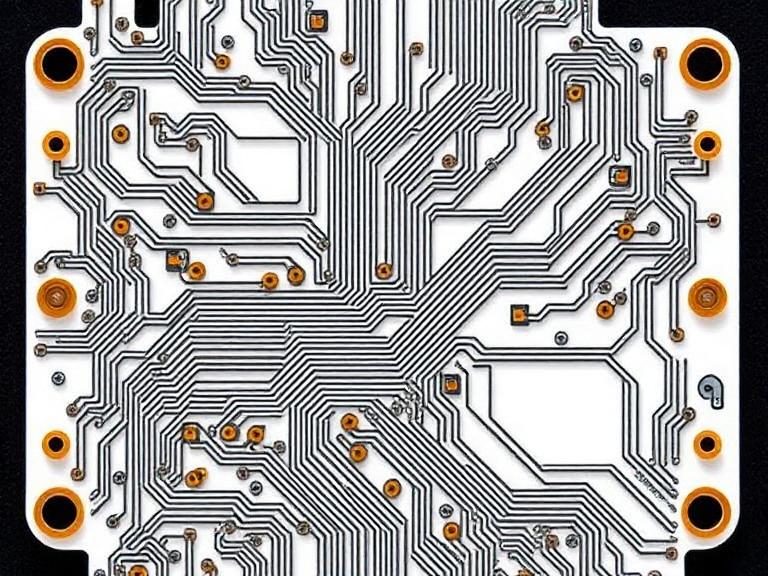
Quick Answer: What is a Ceramic PCB?
A ceramic PCB (Printed Circuit Board) is an electronic board that uses a ceramic base material—such as Alumina (Al2O3), Aluminum Nitride (AlN), or Beryllium Oxide (BeO)—instead of standard FR4 fiberglass or metal-core plastics.
- The Primary Purpose: Extreme thermal conductivity. A ceramic PCB transfers heat away from critical components up to 100 times faster than standard boards.
- How it is made: Copper traces are bonded directly to the ceramic substrate using high-temperature processes like Direct Copper Bonding (DCB) or Direct Plated Copper (DPC).
- The Verdict: It is highly expensive but mandatory for high-power LEDs, aerospace systems, automotive sensors, and high-frequency RF applications where heat dissipation is the defining factor of success.
Table of Contents
- What it is: The Core Materials
- How it works: Beating Thermal Resistance
- Quick Summary Table
- The Commercial Benefits
- Limitations and Drawbacks
- Comparison Table: Ceramic vs FR4 vs MCPCB
- Who Should Use It & Who Does Not Need It
- Common Engineering Mistakes
- Buying Considerations
- Buying Guide Table
- Expert Recommendation
- The Bottom Line
- Frequently Asked Questions
What it is: The Core Materials
Unlike standard printed circuit boards manufactured from woven glass and epoxy resin, a ceramic PCB is built upon highly engineered inorganic compounds. From our experience, the success of your board depends entirely on selecting the correct base ceramic. There are three primary materials used by pcb board makers China and globally:
- Alumina (Al2O3): This is the most common and cost-effective ceramic substrate. It offers good thermal conductivity (around 24-30 W/mK), excellent electrical insulation, and high mechanical strength. It is the workhorse of the ceramic PCB industry.
- Aluminum Nitride (AlN): For heavy-duty applications, AlN is the superior choice. It provides exceptional thermal conductivity ranging from 170 to 220 W/mK—nearly matching beryllium but without the toxicity. It is highly expensive but essential for extreme power modules.
- Beryllium Oxide (BeO): Historically used for its massive thermal conductivity, BeO is largely being phased out of modern manufacturing due to the extreme toxicity of its dust during the machining process. We recommend AlN as the modern, safe alternative.
How it works: Beating Thermal Resistance
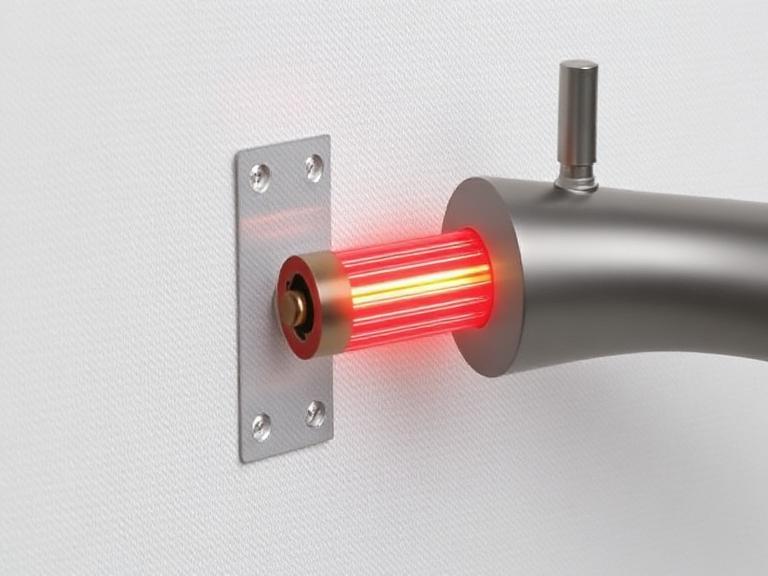
Standard FR4 boards force engineers to drill hundreds of "thermal vias"—copper-plated holes that attempt to drag heat from the top layer to a bottom heat sink. This is an inefficient workaround. A ceramic PCB works by completely eliminating the thermal bottleneck. The entire substrate is thermally conductive.
When a high-power chip generates heat, the ceramic material acts as an immediate thermal bridge, spreading the heat rapidly across the board's surface and pulling it down into an attached heat sink without the need for complex via structures. To achieve this, copper traces must adhere to the ceramic. Because standard adhesives would melt or block heat, manufacturers use advanced techniques like Direct Copper Bonding (DCB), where copper and ceramic are fused together at temperatures exceeding 1000°C, or Direct Plated Copper (DPC), which uses vacuum sputtering for ultra-precise, high-density trace layouts.
Quick Summary Table: Ceramic PCB Characteristics
| Specification | Alumina (Al2O3) | Aluminum Nitride (AlN) |
|---|---|---|
| Thermal Conductivity | 24 - 30 W/mK | 170 - 220 W/mK |
| Coefficient of Thermal Expansion (CTE) | ~7.0 ppm/°C | ~4.5 ppm/°C |
| Dielectric Constant (1 MHz) | 9.8 | 8.9 |
| Relative Cost | Moderate | Very High |
The Commercial Benefits
If you are simply looking to reduce costs, ceramic is not your answer. But if you are engineering for survival in harsh environments, the benefits are unmatched.
First, the thermal conductivity is unparalleled. An AlN ceramic PCB will dissipate heat up to 700 times better than standard FR4. Second, ceramic boasts a highly favorable Coefficient of Thermal Expansion (CTE). When silicon chips heat up, they expand. FR4 expands at a vastly different rate than silicon, causing solder joints to crack over time. Ceramic expands at a rate nearly identical to silicon chips, eliminating thermal stress and ensuring long-term reliability in fluctuating temperatures.
Finally, for high-frequency RF and microwave applications, ceramics offer a incredibly stable dielectric constant and extremely low signal loss, making them the default choice for 5G telecommunications infrastructure.
Limitations and Drawbacks
We believe in commercial reality, which means addressing the limitations. A ceramic PCB is incredibly brittle. If a technician drops an assembled ceramic board, it will likely shatter like a dinner plate. They cannot bend or flex, meaning installation requires precise mechanical mounting to avoid stress fractures.
Furthermore, the manufacturing process is highly specialized. You cannot simply send a ceramic design to cheap electronic PCB board manufacturers expecting rapid prototypes for pennies. The raw materials are expensive, and the high-temperature bonding processes take time and precision, significantly driving up the unit cost.
Comparison Table: Ceramic vs FR4 vs MCPCB
| Feature | Standard FR4 | Metal Core PCB (MCPCB) | Ceramic PCB (AlN/Al2O3) |
|---|---|---|---|
| Thermal Conductivity | 0.25 - 0.4 W/mK (Very Poor) | 1.0 - 4.0 W/mK (Moderate) | 24 - 220 W/mK (Exceptional) |
| Insulation Layer Required? | No (inherently insulating) | Yes (causes a thermal bottleneck) | No (inherently insulating) |
| Maximum Operating Temp | ~130°C (Tg limit) | ~150°C | 350°C+ |
| Mechanical Durability | High (flexible) | Very High (rigid metal base) | Low (brittle, shatters easily) |
Who Should Use It & Who Does Not Need It
For commercial users and high-end engineering: You absolutely must use a ceramic PCB if you are designing high-power LED arrays, automotive engine control units (ECUs), solar power converters, aerospace avionics, or concentrated RF/microwave transmitters. If thermal failure means a recall or catastrophic system failure, ceramic is your insurance policy.
For beginners and consumer electronics: Do not use a ceramic PCB for smart home gadgets, basic IoT sensors, keyboards, or low-power consumer devices. The cost-to-benefit ratio makes zero sense. Standard FR4 is perfectly capable, and if you need slight thermal improvement on a budget, investigate low cost PCB manufacturers for standard aluminum-backed Metal Core PCBs (MCPCBs).
Common Engineering Mistakes
In our testing and review of client designs, the most frequent mistake is over-specifying. We frequently see engineers demand Aluminum Nitride (AlN) for a design that barely exceeds 50 watts of power. AlN is incredibly expensive. In most professional situations, standard Alumina (Al2O3) provides more than enough thermal conductivity for mid-to-high power applications at a fraction of the cost.
Another major mistake is ignoring mounting stress. Because ceramics are brittle, securing a ceramic PCB tightly against an uneven metal chassis will cause the board to snap when the screws are torqued down. Always design in thermal interface materials (TIMs) or soft mounting pads to absorb mechanical variances.
Buying Considerations
When you are ready to transition your designs to ceramic, your choice of manufacturing partner dictates your success. Only the best electronic manufacturing companies possess the vacuum sputtering equipment and high-temperature furnaces required for DPC and DCB bonding.
You must audit your supplier. Ask about their maximum panel sizes—ceramic boards are typically limited to smaller dimensions (e.g., 5x5 inches or 120x120mm) due to the fragility of the wafers during manufacturing. Ensure they have automated optical inspection (AOI) specifically calibrated for ceramic substrates to catch micro-cracks before they ship.
Buying Guide Table: Specifying a Ceramic PCB
| Application Requirement | Recommended Ceramic Material | Recommended Metallization |
|---|---|---|
| General High-Power LED, < 100W | 96% Alumina (Al2O3) | DPC (Direct Plated Copper) |
| Power Converters / IGBT Modules, > 100W | Aluminum Nitride (AlN) | DCB (Direct Copper Bonding) for thick copper |
| High-Frequency RF / Microwave | 99.6% Alumina or AlN | Thin Film / DPC for precise trace widths |
Expert Recommendation
The Wintech Perspective
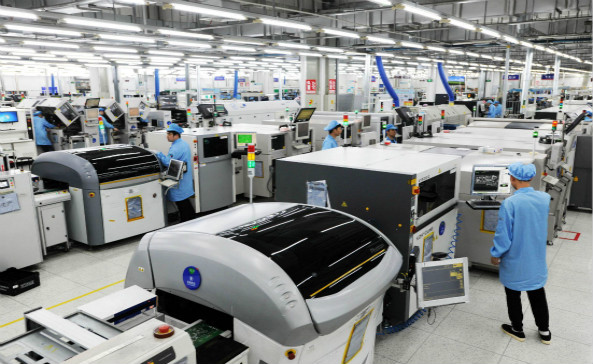
Wintech is a full turnkey service, high-mix, low to mid volume electronics manufacturing and custom material solutions provider with a proven track record of supplying state-of-the-art solutions to a global customer base. We provide tailor-made solutions for our customers: high level, highly difficult, large size, complex structure, high precision PCB Layout, PCBAs and turnkey complete products.
From our experience consulting with the world's top 500 enterprises, we strongly advise transitioning to ceramic PCBs for any product where thermal degradation reduces the operational lifespan by more than 20%. Do not view ceramic substrates as an expensive luxury; view them as a necessity for reliability. Partnering with elite electronic manufacturing services companies allows you to prototype these boards efficiently. If your design struggles with heat on FR4, we recommend moving straight to DPC Alumina for your next prototype iteration.
The Bottom Line
A ceramic PCB is the ultimate solution to the thermal and high-frequency limitations of standard FR4 fiberglass. By utilizing Alumina or Aluminum Nitride, engineers can pull massive amounts of heat away from critical silicon, match thermal expansion rates to prevent solder joint failure, and achieve unparalleled signal integrity. While they command a premium price and require careful mechanical handling, ceramic boards are the non-negotiable foundation of modern power electronics, automotive sensors, and advanced telecommunications.
Frequently Asked Questions
Yes, significantly. A ceramic PCB can cost anywhere from 5 to 20 times more than a standard FR4 board depending on the specific ceramic material (AlN is much more expensive than Alumina) and the copper bonding process required. However, for high-power applications, this cost is offset by the elimination of external heat sinks and active cooling fans.
Yes. While single-sided and double-sided ceramic boards are the most common, advanced manufacturers can produce multi-layer ceramic PCBs. These are often manufactured using HTCC (High-Temperature Co-fired Ceramic) or LTCC (Low-Temperature Co-fired Ceramic) processes, which allow for complex 3D routing.
Components are mounted to a ceramic PCB using standard Surface Mount Technology (SMT) processes, including solder paste printing and reflow ovens. However, the thermal profile of the reflow oven must be carefully calibrated, as the extreme thermal conductivity of the ceramic can draw heat away from the solder joints too rapidly if not managed correctly.
Authoritative Industry References
- IPC International - The global association defining the standards for printed board design, manufacture, and assembly, including specific guidelines for rigid and ceramic substrates.
- IEEE (Institute of Electrical and Electronics Engineers) - Comprehensive academic and industrial research regarding thermal management, DCB technologies, and coefficient of thermal expansion (CTE) matching in power electronics.
- EE Times - Industry-leading news and analysis publication offering deep-dive engineering articles on the commercial shift from FR4 to ceramic substrates in the automotive and telecommunications sectors.


