

PCB Cost Per Square Inch in 2026: What Buyers Should Actually Pay Attention To
If you are buying printed circuit boards this year, PCB cost per square inch is a useful starting point, but it is not the number that should make the final decision for you. From our experience, the best procurement teams do not ask, “What is the cheapest square inch?” They ask, “What is the total cost of a board that meets the design, test, reliability, and delivery target?” That distinction matters. It is the difference between a quote that looks attractive on paper and a build that is actually worth paying for.
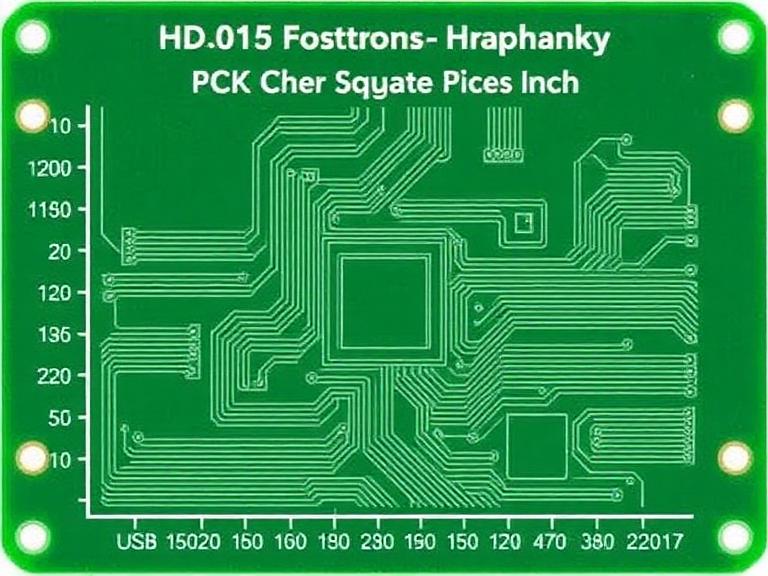
PCB cost per square inch is a shorthand way to compare board pricing, but it only works when you keep the design variables fixed: layer count, material, copper weight, surface finish, hole complexity, tolerances, panelization, testing, and volume. For beginners, it helps you benchmark quotes. For commercial users, it is better used as a screening tool, not a buying rule. In most professional situations, the cheapest quote is not the lowest-risk or lowest-total-cost option.
What PCB Cost Per Square Inch Means
PCB cost per square inch is simply the board price divided by the physical board area. Buyers like it because it creates a fast comparison point across suppliers and projects. The problem is that it hides the details that actually drive cost. A large, simple two-layer FR-4 board can look “cheap per inch,” while a compact HDI board with buried vias, impedance control, and tighter tolerances can be expensive even at a lower area.
In practical terms, the metric is most useful when you are comparing similar boards from the same class of build. It becomes misleading when one vendor quotes a bare board and another quotes a panelized, tested, documented build. If your assembly includes components, see our pcb assembly lead time guide and our pcb components and functions guide so you can separate board cost from assembly cost.
How PCB Pricing Really Works
There is no universal tariff for PCB cost per square inch. Instead, suppliers build a quote from a set of variables. In most professional situations, the price changes because of design complexity, not because of raw area alone. A buyer who understands this gets better quotes faster and avoids a lot of rework.
What the supplier is actually pricing
- Layer count and stack-up complexity
- Material selection and laminate grade
- Copper weight and trace capability
- Hole size, via structure, and drilling time
- Surface finish and solderability requirements
- Tight tolerances, controlled impedance, and warp limits
- Panel utilization, testing, inspection, and yield risk
From our experience, the board area is only one part of the equation. A small board with buried vias and controlled impedance can cost more than a bigger board with relaxed design rules. That is why professional buyers usually treat square-inch pricing as a screening metric, then ask for a line-by-line explanation before issuing a purchase order.
Practical rule: use PCB cost per square inch to compare similar designs, not to compare unlike designs. If the layer count, material, finish, or test plan changes, the metric stops being a fair comparison.
Benefits and Limitations of Using PCB Cost Per Square Inch
Benefits
- It gives buyers a fast first-pass comparison.
- It helps teams budget early when the design is still flexible.
- It makes it easier to spot quotes that are obviously out of range.
- It works well for repeat builds and similar board families.
Limitations
- It can hide complexity costs.
- It does not reflect yield loss or rework risk.
- It ignores assembly, sourcing, and logistics unless you add them back in.
- It can push buyers toward the wrong design trade-off.
For commercial users, the main limitation is simple: a low square-inch price does not always mean a good board. If the supplier cuts corners on process control, lead time, or electrical testing, you may save money on the quote and lose it later in scrap, debug time, or warranty returns. That is why we recommend pairing price analysis with supplier capability checks. If you are sourcing board houses, our guide to top PCB suppliers worldwide and best PCB manufacturers China can help you narrow the field.
Who Should Use This Metric and Who Does Not Need It
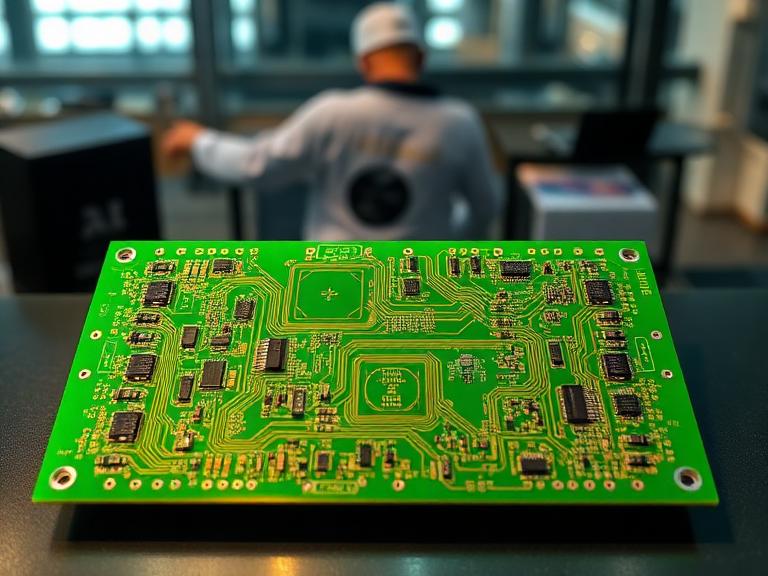
Use PCB cost per square inch if you are comparing prototypes, recurring builds, or multiple supplier quotes for a similar stack-up. It is also useful for purchasing teams that need a quick budget gate before engineering locks the design.
Do not rely on it if your project is highly customized, safety-critical, or assembly-heavy. In those cases, the cost of poor quality, traceability, and process control matters more than the nominal board size.
Best fit
- Prototyping and early DFM reviews
- Low-to-mid volume production
- Standard FR-4 board families
- Procurement benchmarking across several factories
Not a good fit
- HDI boards with microvias
- Rigid-flex or heavy-copper builds
- Boards with strict impedance or thermal performance needs
- Projects where assembly, test, and packaging dominate total cost
When the board is only one part of a larger system, working with a full-turnkey partner is often smarter than chasing the lowest bare-board price. That is where a supplier like Wintech makes sense: high-mix, low-to-mid volume PCBAs, complex structure builds, and complete system delivery are exactly the kind of projects where board price must be judged inside the full manufacturing flow.
Comparison Table: Which PCB Types Usually Cost More per Square Inch
| PCB Type | Typical Use Case | Cost Behavior | When It Is Worth Paying More |
|---|---|---|---|
| 2-layer FR-4 | Simple consumer, control, and utility boards | Usually the lowest cost per square inch | When speed, basic reliability, and cost control matter most |
| 4-layer FR-4 | Mixed-signal, denser routing, cleaner power distribution | Moderate increase in cost and process control | When signal integrity and layout efficiency justify the upgrade |
| Multilayer / HDI | Compact electronics, high pin-count ICs, advanced devices | Higher cost due to vias, lamination, and inspection | When board size must shrink or routing density must increase |
| Heavy copper / power board | Power conversion, charging, industrial controls | Higher cost from plating and material demands | When current handling and thermal performance are essential |
| Rigid-flex | Wearables, medical devices, compact assemblies | Highest complexity in many programs | When mechanical flexibility replaces connectors or wiring |
That comparison is why the question “What is the PCB cost per square inch?” is less important than “What kind of board am I really buying?” If you are still deciding between suppliers, reviewing top electronic contract manufacturers and PCB manufacturers in USA can help you match cost structure to your production model.
Pros vs Cons Table
| Pros of Using PCB Cost Per Square Inch | Cons of Using PCB Cost Per Square Inch |
|---|---|
| Fast to understand and easy to benchmark | Can hide complexity and quality differences |
| Useful in early budgeting and RFQ screening | Can mislead buyers when designs are not comparable |
| Works well for repeat production families | Does not include assembly, test, or logistics by default |
| Helps spot outlier pricing quickly | Encourages oversimplified purchasing decisions |
Buying Considerations: What Changes PCB Cost in 2026
Buyers often assume the cheapest square-inch number is the best deal. In our testing, that is rarely true once you factor in yield, support, and assembly readiness. A board house that asks good questions during quoting usually delivers better outcomes later.
| Cost Driver | Why It Changes the Price | What Buyers Should Ask |
|---|---|---|
| Layer count | More layers increase lamination, drilling, and inspection complexity | Can we reduce layers without harming performance? |
| Material choice | High-Tg, low-loss, or specialty laminates cost more than standard FR-4 | Is the material truly required for the operating environment? |
| Copper weight | Heavy copper increases fabrication effort and process control | Do we need heavy copper everywhere or only in power zones? |
| Surface finish | ENIG, immersion silver, and other finishes add cost and process steps | Which finish matches the soldering and reliability target? |
| Tolerances and impedance | Tighter control increases scrap risk and testing requirements | Are these tolerances driven by function or habit? |
| Panelization and volume | Better panel efficiency lowers unit cost; low volume raises overhead | Can the design be panelized better without changing the product? |
For heavy-duty applications, we recommend optimizing the design around failure cost, not only fabrication cost. A board that runs hot, carries current, or lives in a harsh enclosure should be built for the field, not for the cheapest quote. If you need to repair or recover older boards instead of replacing them, our article on can burnt circuit board be repaired is a useful decision aid.
Common Mistakes Buyers Make
- Comparing different board types as if they were equivalent. A two-layer board and a six-layer board cannot be judged by the same square-inch benchmark.
- Ignoring test and inspection scope. Electrical test, AOI, X-ray, and documentation all affect the real cost.
- Forgetting assembly impact. Bare board savings can disappear once component placement, soldering, and rework are added.
- Over-specifying everything. Many teams buy tighter tolerances than the product actually needs.
- Choosing a supplier only by quote size. Capability, communication, and lead time often matter more than a small price gap.
If you are purchasing at scale, the right question is not “Who is cheapest?” It is “Who can hold process consistency at the quantity and complexity I need?” For that reason, buyers should compare not only pcb fabrication manufacturers 2026 but also how they handle quoting clarity, change control, and lead time discipline.
Expert Recommendation
Here is our position: use PCB cost per square inch as a buying filter, not a buying conclusion. It is good for early-stage pricing sanity checks, but it should never override reliability, manufacturability, and total delivered cost. That is the approach professional teams use when they want a board that ships on time and survives in production.
For beginners, stay with standard FR-4, keep the layer count under control, and ask suppliers for a clear explanation of the price drivers. For commercial users, focus on repeatability, panel efficiency, and supplier responsiveness. For high-risk products, pay for process control. The cheapest square-inch price is a poor bargain if it creates debug work or field returns.
Wintech is a strong fit when your requirement goes beyond simple board buying. If your project needs high-mix, low-to-mid volume PCBAs, complex structures, prototype-to-production support, or full turnkey electronic manufacturing, the commercial value is not just the board price. It is the ability to get a build that is actually ready for deployment.
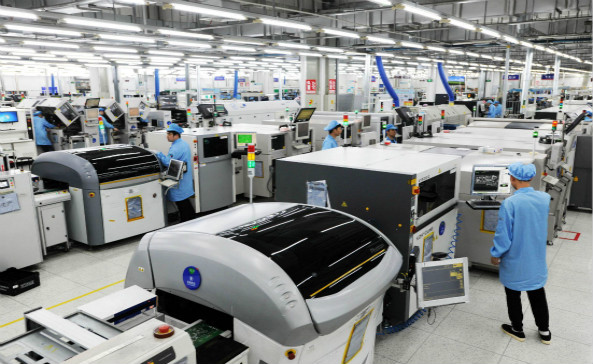
PCB cost per square inch is useful, but only as a comparison tool. The real buying decision depends on complexity, material, testing, assembly, and field reliability. In most professional situations, the best procurement outcome comes from choosing the board that meets the technical target with the lowest total risk, not the lowest headline number.
FAQs
Is PCB cost per square inch a reliable way to compare suppliers?
Yes, but only when the boards are truly comparable. If the layer count, material, finish, and test requirements are different, the metric becomes misleading. It is best used for shortlisting, not final judgment.
Why does a smaller PCB sometimes cost more per square inch?
Because the real cost driver is often complexity. A smaller board may have tighter routing, more vias, denser component spacing, or stricter tolerances, all of which increase fabrication effort.
Should I always choose the lowest PCB price?
No. The lowest quote can come with higher risk, slower response, weaker process control, or more rework. The smarter decision is the lowest total cost for a board that performs reliably in production.
How do I reduce PCB cost without hurting quality?
Start by simplifying the stack-up, avoiding unnecessary tolerances, improving panelization, and choosing a material that matches the application rather than over-specifying. The biggest savings usually come from design choices, not vendor pressure.
When should I stop focusing on square-inch price?
Once the project moves beyond simple prototype comparison. After that point, the priorities should shift to manufacturability, reliability, supply consistency, and how well the supplier supports assembly and scale-up.
References
These references are included for standards context and professional validation. They are the kind of sources procurement and engineering teams typically consult when building a reliable PCB sourcing workflow.


