

The Expert Engineering Guide: Steps for PCB Prototype Board How to Use and Validate
In the highly demanding and rigorous landscape of electronics manufacturing, bridging the gap between a theoretical circuit schematic and a fully functional, mass-produced product requires meticulous physical validation. Hardware engineers, developers, and product designers constantly face the challenge of proving their concepts before committing to expensive fabrication runs. When addressing the topic of a PCB prototype board how to use it correctly becomes the defining factor between a successful project and a costly failure. A prototype board allows for the physical testing of components, the measurement of electrical characteristics under real-world conditions, and the identification of fatal design flaws early in the development lifecycle.
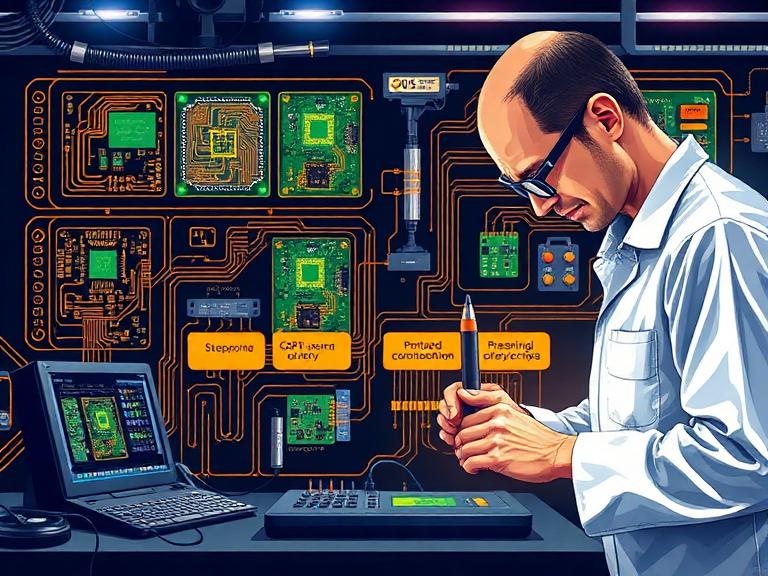
From our experience at Wintech, as a full turnkey service, high-mix, low to mid volume electronics manufacturing provider, mastering the initial prototyping phase is the absolute bedrock of successful New Product Introduction NPI. Many of the world's top 500 enterprises have cooperated with us for many years because we understand the critical nature of hardware validation. We provide tailor-made solutions for our customers, handling high level, high difficult, large size, complex structure, and high precision PCB Layout requirements. In this comprehensive, authoritative guide, we will walk you through the precise engineering steps regarding a PCB prototype board how to use it efficiently, and how to seamlessly transition your validated prototype into our world-class Quick Turn Fast PCB Prototype Assembly and mass production workflows.
Table of Contents
1. Understanding the Architecture of a PCB Prototype Board
Before initiating any practical work, one must understand the structural variations of prototyping platforms. The term generally refers to universal printed circuit boards, commonly known as perfboards, stripboards, or veroboards. These boards consist of a rigid substrate, typically FR-4 glass-reinforced epoxy laminate, pre-drilled with a standard grid of holes spaced 0.1 inches (2.54 mm) apart. Each hole is surrounded by a copper pad to facilitate soldering.
When engineers inquire about a PCB prototype board how to use it effectively, the first consideration is selecting the right board type. A perfboard features isolated copper pads, requiring the user to create every electrical connection manually using solder bridges or jumper wires. A stripboard, conversely, features continuous copper tracks running along one axis of the board, allowing components to be connected simply by placing them on the same track, with a trace-cutting tool used to break connections where necessary. We recommend perfboards for highly complex, high-density circuits, and stripboards for simpler, linear logic circuits.
2. The 5 Crucial Steps: PCB Prototype Board How to Use
Executing a flawless hardware prototype requires patience, precision, and adherence to strict electronic engineering protocols. Below is our expert methodology on navigating a PCB prototype board how to use it safely, and how to achieve reliable electrical performance.
2.1 Step 1: Schematic Translation and Component Procurement
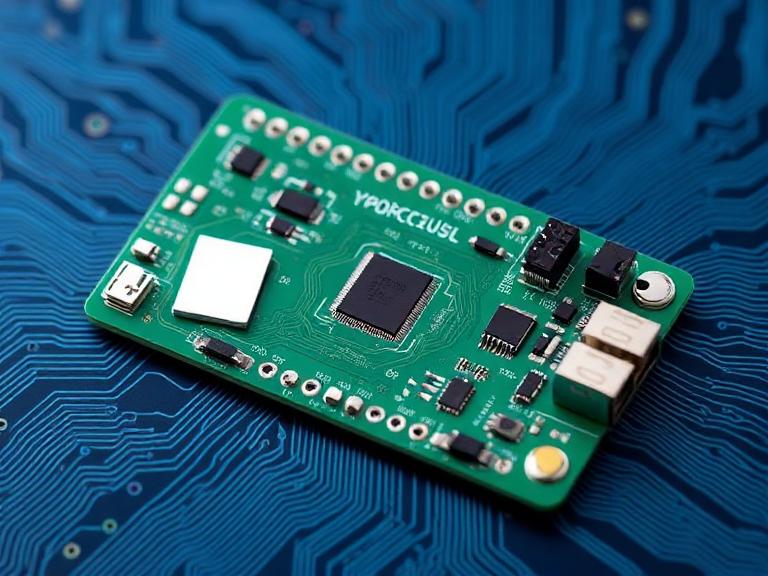
Every successful physical build begins with a rigorously tested schematic diagram. You must translate your digital schematic into a physical layout plan. When planning for a PCB prototype board how to use the available real estate is critical. Group logically related components together. For instance, keep your power supply regulation components, such as voltage regulators and smoothing capacitors, isolated in one corner of the board to prevent electromagnetic interference (EMI) from affecting sensitive analog signal pathways.
Ensure you have procured all necessary through-hole components. While Surface Mount Technology (SMT) dominates mass production, standard prototyping boards are designed exclusively for through-hole components. If your design mandates specific SMT chips, you will need to utilize breakout boards to adapt them to the 2.54 mm pitch grid.
2.2 Step 2: Component Placement and Spatial Layout
Begin populating the board without applying any solder. Insert the leads of the heaviest and tallest components first, such as transformers, relays, and large electrolytic capacitors, followed by integrated circuit (IC) sockets, resistors, and diodes. We strongly recommend using IC sockets rather than soldering delicate microcontrollers directly to the board; this prevents thermal damage during the soldering process and allows for rapid chip replacement during the debugging phase.
When teaching junior engineers about a PCB prototype board how to use it for optimal signal integrity, we emphasize keeping signal paths as short as mechanically possible. Long, winding jumper wires act as antennas, picking up parasitic noise that will destabilize high-frequency circuits.
2.3 Step 3: Soldering Techniques and Thermal Management
The mechanical and electrical integrity of your prototype depends entirely on your soldering proficiency. Utilize a temperature-controlled soldering iron set between 300 to 350 degrees Celsius, depending on the mass of the component lead and whether you are using leaded or lead-free solder. Apply a high-quality rosin-core solder to the junction of the copper pad and the component lead.
To master the PCB prototype board how to use the soldering iron correctly involves heating the pad and the lead simultaneously for one to two seconds before introducing the solder wire. The solder should flow smoothly, creating a shiny, concave fillet resembling a miniature volcano. If the solder beads up into a dull, convex sphere, you have created a cold solder joint, which will cause intermittent electrical failures and high resistance pathways.
2.4 Step 4: Routing Traces and Creating Electrical Connections
Because a standard perfboard lacks pre-routed internal copper layers, you must physically build the traces. There are two primary methods for achieving this on a PCB prototype board how to use solder bridging or wire wrapping.
Solder bridging involves dragging molten solder across adjacent copper pads to form a continuous track. This requires skill and a generous application of liquid flux to control the surface tension of the solder. Alternatively, for complex routing, we recommend using 30 AWG Kynar-insulated wire, commonly known as wire-wrapping wire. Strip a small section of the insulation, wrap the bare wire around the component lead protruding through the bottom of the board, and solder it in place. Ensure that power and ground lines utilize thicker gauge wire (such as 22 AWG or 24 AWG) to handle higher current loads without overheating.
2.5 Step 5: Continuity Testing and Circuit Debugging
Never apply power to a newly assembled prototype without rigorous preliminary testing. Set your digital multimeter to continuity mode and verify that every connection aligns perfectly with your schematic. The most critical aspect of the PCB prototype board how to use procedure is verifying the absence of short circuits between the power rails (VCC) and the ground plane (GND). A short circuit here will catastrophically destroy your components or power supply upon activation.
Once continuity is verified, apply power gradually using a current-limited benchtop power supply. Monitor the board for excessive heat generation or the smell of burning components. Utilize oscilloscopes to verify signal integrity and logic analyzers to confirm data bus communications. Only when the prototype behaves flawlessly under all simulated operating conditions is the design ready for professional fabrication.
3. Transitioning to Professional PCB Manufacturing with Wintech

While manual prototyping is an excellent proof-of-concept exercise, hand-wired boards are fragile, prone to parasitic capacitance, and entirely unsuitable for commercial deployment. Once you have fully understood the PCB prototype board how to use phases and validated your circuit logic, the next logical step is partnering with an elite manufacturing facility to scale your product.
At Wintech, our full turnkey systems electronic contract manufacturing solutions take your validated prototype and transform it into a market-ready product. Our engineering team excels in high precision PCB Design & Layout, converting your messy wire-wrapped prototype into a streamlined, multi-layer FR-4 board optimized for signal integrity and thermal dissipation. We specialize in Quick Turn Fast PCB Prototype Assembly, allowing you to receive professionally manufactured, machine-soldered boards in record time.
Our capabilities extend far beyond bare boards. We offer comprehensive PCB Assembly & PCBA SMT services, placing microscopic surface-mount components with absolute robotic precision. Furthermore, to support your complete New Product Introduction NPI, Wintech provides full mechanical housing solutions through our advanced Plastic Molding and Metal Precision Machining divisions. By integrating these services, we ensure that your electronic hardware perfectly interfaces with its mechanical enclosure, delivering a flawless end-user experience.
4. Summary Table: Prototyping Stages and Required Tooling
To assist your engineering team in preparing for the validation phase, we have compiled a summary of the critical stages and the corresponding professional tooling required.
| Prototyping Stage | Primary Objective | Essential Engineering Tooling | Wintech Professional Solution |
|---|---|---|---|
| Layout Planning | Spatial arrangement and signal path optimization. | Breadboards, CAD Software, Component Datasheets. | Professional PCB Design & Layout services for high density routing. |
| Assembly & Soldering | Creating permanent mechanical and electrical joints. | Temperature-controlled soldering station, 30 AWG wire, Rosin Flux. | Automated PCB Assembly & PCBA SMT for micron-level accuracy. |
| Validation & Testing | Ensuring electrical safety and logic functionality. | Digital Multimeter, Oscilloscope, Benchtop Power Supply. | Automated Optical Inspection (AOI) and In-Circuit Testing (ICT). |
| Enclosure Integration | Protecting the circuit from environmental hazards. | 3D Printers, Calipers, Manual modification tools. | Custom Plastic Molding and Metal Precision Machining. |
| Scaling for Market | Transitioning from single unit to mass production. | Supply chain management, component sourcing matrices. | Turnkey New Product Introduction NPI and mass production. |
5. Frequently Asked Questions (FAQs)
6. References
- IPC - Association Connecting Electronics Industries: Standards for PCB Assembly and Soldering
- Institute of Electrical and Electronics Engineers (IEEE): Guidelines on Signal Integrity and Hardware Prototyping
- Surface Mount Technology Association (SMTA): Best Practices for Transitioning from Through-Hole to SMT Manufacturing


