

5 Key Difference Between PCA and PCB
The Definitive Guide: Understanding the Key Difference Between PCA and PCB
Authored by Wintech. Located in Shenzhen, China, Wintech Technology Co.,Ltd. has been providing fast, reliable, and low-cost China printed circuit boards assembly services since 1996. We support the rapidly evolving needs of the global electronics industry through comprehensive turnkey production services.
In the fast-paced and highly technical world of electronics manufacturing, terminology is everything. Engineers, procurement specialists, and product managers frequently use acronyms that sound remarkably similar but represent entirely different stages of production. One of the most common sources of confusion during the quoting and manufacturing phases is distinguishing the difference between PCA and PCB. Failing to specify the correct term can lead to critical supply chain delays, inaccurate budget forecasting, and severe project mismanagement.
From our experience working with global enterprises over the last two decades, clarifying the difference between PCA and PCB is the foundational step in any successful hardware project. Whether it is a start-up looking to complete a prototype under a tight budget, or an electronics firm requiring high quality China PCB production runs, understanding these terms ensures that expectations align with manufacturing deliverables. In this comprehensive technical guide, we will dissect the fundamental anatomy of both terms, explore the manufacturing processes involved, and definitively map out the key difference between PCA and PCB.
Table of Contents
- 1. What is a PCB (Printed Circuit Board)?
- 2. What is a PCA (Printed Circuit Assembly)?
- 3. Analyzing the Core Difference Between PCA and PCB
- 4. The Manufacturing Transition: From Bare Board to PCA
- 5. The Wintech Advantage in Electronics Manufacturing
- 6. Summary Table: Difference Between PCA and PCB
- 7. Frequently Asked Questions (FAQs)
- 8. Industry References
1. What is a PCB (Printed Circuit Board)?
Before we can fully understand the difference between PCA and PCB, we must define the baseline component. A PCB, or Printed Circuit Board, is the bare, unpopulated board that provides the structural foundation and electrical routing for an electronic device. At this stage, it is essentially a blank canvas. It contains no electronic components such as resistors, capacitors, microcontrollers, or connectors. The primary function of a PCB is to mechanically support and electrically connect electronic components using conductive tracks, pads, and other features etched from copper sheets laminated onto a non-conductive substrate.
We recommend paying close attention to the substrate material selection during the initial design phase, as this directly impacts the thermal and high-frequency performance of the final product. At Wintech, our production lines are highly versatile, accommodating a wide variety of sizes and substrates types including FR4, Rogers, metal core aluminum, copper, duroid, ceramic, CEM 1, and CEM 3. The process of creating this bare board falls under our specialized PCB Manufacturing division. A bare PCB is entirely non-functional on its own; it cannot process signals, regulate power, or perform any computational tasks until it undergoes subsequent manufacturing phases.
2. What is a PCA (Printed Circuit Assembly)?
To pinpoint the difference between PCA and PCB, we must look at the next stage of the electronics lifecycle. A PCA, which stands for Printed Circuit Assembly (also widely referred to as PCBA), is the completed, fully functional board after all electronic components have been successfully soldered onto the bare PCB. Once the bare board has gone through the assembly process, it transforms into a PCA.
This stage requires highly specialized machinery and strict quality control protocols. The components are attached using either Surface Mount Technology (SMT), Through-Hole Technology (THT), or a combination of both. At this point, the board is capable of performing the electronic functions for which it was designed. When clients utilize our PCB Assembly & PCBA SMT services, they are taking their bare PCBs and turning them into functional PCAs ready for final product integration. Therefore, the most critical difference between PCA and PCB is the presence of electronic components and active functionality.
3. Analyzing the Core Difference Between PCA and PCB
When interacting with contract manufacturers, understanding the difference between PCA and PCB ensures accurate communication. Let us break down the difference between PCA and PCB across several critical engineering and procurement categories.
Functionality and Purpose
The most obvious difference between PCA and PCB lies in functionality. A PCB is an inert mechanical support structure. It directs electrical current but generates no action. Conversely, a PCA is a dynamic, functional unit. It contains the microprocessors, memory chips, and power regulators necessary to execute complex operational commands.
Manufacturing Complexity
There is a vast difference between PCA and PCB regarding manufacturing complexity. PCB fabrication involves chemical etching, drilling, and plating processes to create copper traces and vias. PCA manufacturing, however, is an assembly discipline. It requires solder paste printing, high-speed pick-and-place robotics, multi-zone reflow ovens, and rigorous automated optical inspection (AOI). Our board-level PCB assembly processes support customers with needs from extremely low cost to extremely high reliability, utilizing continuous, contiguous, automatic and cellular manufacturing line configurations to serve a wide range of volumes and product mixes.
Cost and Lead Time
From a procurement standpoint, the difference between PCA and PCB is stark. A bare PCB represents a fraction of the total cost of the final electronic module. The PCA incorporates the cost of the bare board, the cost of the electronic components (the Bill of Materials), and the labor/machine time required for assembly. Consequently, the lead time for a PCA is generally longer, as it depends on global component sourcing and supply chain availability. To mitigate these delays, Wintech offers a highly optimized Quick Turn Fast PCB Prototype Assembly service to accelerate your time to market.
4. The Manufacturing Transition: From Bare Board to PCA
From our experience, visualizing the transition helps solidify the difference between PCA and PCB. The journey from a static board to a functional assembly is intricate and demands uncompromising precision.
First, the bare PCB undergoes solder paste application. A stainless steel stencil is used to apply solder paste precisely to the component pads. Next, the board moves to the SMT pick-and-place machines. Here, robotic arms mount tiny surface-mount components onto the solder paste at blazing speeds. Understanding the difference between PCA and PCB is easy when watching this phase, as the board rapidly gains its components.
The populated board then travels through a reflow soldering oven, where the solder paste melts and solidifies, creating robust mechanical and electrical bonds. If the design includes legacy or high-power components, Through-Hole insertion and wave soldering are performed. Because environmental compliance is critical in modern manufacturing, Wintech maintains segregated inventory and production areas for leaded and RoHS assembly. This lean discipline provides enhanced schedule flexibility while minimizing inventory liability.
5. The Wintech Advantage in Electronics Manufacturing
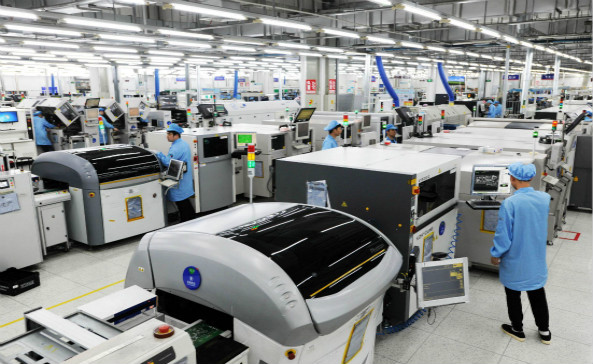
China Wintech has been providing turnkey electronics PCBA assembly and contract manufacturing for worldwide companies for over 20 years. Knowing the difference between PCA and PCB is just the beginning; selecting a manufacturer that excels at both ends of the spectrum is the ultimate goal. With our production facility located in China, we can take advantage of low production costs and skilled labor to provide tailored China printed circuit boards assembly services.
We do not just stop at the board level. Our comprehensive New Product Introduction NPI process ensures that transitioning from design to mass production is seamless. Furthermore, recognizing that a functional PCA must eventually be housed in a physical product, we offer expanded capabilities including Plastic Molding and Metal Precision Machining. By integrating PCB Design & Layout with full mechanical fabrication, we operate as a true one-stop-shop for hardware innovators globally. Regardless of the project, we strive every day to exceed the needs of clients around the world with the goal of becoming the industry leading China PCB assembly provider as well as turnkey production services.
6. Summary Table: Difference Between PCA and PCB
To provide a quick reference for procurement teams and design engineers, we have consolidated the key points regarding the difference between PCA and PCB in the table below.
| Feature / Attribute | PCB (Printed Circuit Board) | PCA (Printed Circuit Assembly) |
|---|---|---|
| Definition | A bare board with conductive pathways, devoid of electronic components. | A fully populated board with soldered electronic components. |
| Functionality | Non-functional; acts only as a structural and routing foundation. | Fully functional; capable of executing electronic commands and logic. |
| Manufacturing Process | Etching, drilling, copper plating, solder mask application, silkscreen. | Solder paste printing, pick-and-place, reflow soldering, wave soldering, testing. |
| Components Present | None. Only substrate, copper traces, and finish. | Resistors, capacitors, ICs, connectors, microcontrollers, etc. |
| Cost Profile | Lower cost, dependent on layer count and substrate material (e.g., FR4, Rogers). | Higher cost, includes the bare PCB, all components (BOM), and assembly labor. |
7. Frequently Asked Questions (FAQs)
Why is it important to know the difference between PCA and PCB when requesting a quote?
From our experience, using the wrong terminology can drastically alter the scope of your quote. If you request a quote for a PCB when you actually need a PCA, the manufacturer will only price the fabrication of the bare board, completely omitting the cost of the electronic components and the labor required to solder them. Understanding the difference between PCA and PCB ensures you receive accurate pricing and lead times.
Are PCBA and PCA the exact same thing?
Yes. Printed Circuit Assembly (PCA) and Printed Circuit Board Assembly (PCBA) are interchangeable terms within the industry. Both refer to the final, functional board after components have been soldered onto the bare PCB.
What types of substrates does Wintech use for its PCBs?
We recommend matching the substrate to your operational requirements. Our PCB assembly lines are versatile for a variety of sizes and substrates types, including standard FR4, high-frequency Rogers, metal core aluminum for superior heat dissipation, copper, duroid, ceramic, CEM 1, and CEM 3.
Does Wintech provide assembly for prototypes as well as mass production?
Absolutely. We have provided China PCB assembly solutions for a variety of customers, whether it is a start-up looking to complete a prototype under a tight budget via our Quick Turn Fast PCB Prototype Assembly, or an established electronics firm requiring high quality, high-volume mass production runs.
8. Industry References
- IPC - Association Connecting Electronics Industries: Global Standards for PCB and PCA
- Surface Mount Technology Association (SMTA): Advancements in PCA Manufacturing
- Institute of Electrical and Electronics Engineers (IEEE): Circuit Board Substrate Research


