

7 Functions of Electronics Manufacturing Services: A Professional 2026 Guide
1. Introduction to the EMS Landscape
As we navigate the complexities of 2026, the electronics industry has transitioned from simple assembly to a sophisticated, integrated ecosystem. Original Equipment Manufacturers (OEMs) no longer look for simple labor; they seek strategic partners capable of managing the entire product lifecycle. The functions of electronics manufacturing services (EMS) have expanded to include high-level engineering, global supply chain resilience, and advanced mechanical integration. In an era defined by rapid technological shifts in AI, 5G, and electric vehicles, the role of an EMS provider is more critical than ever.
Table of Contents
- 1. Introduction to the EMS Landscape
- 2. The Core Functions of Electronics Manufacturing Services
- 3. PCB Design, Layout, and Advanced Engineering
- 4. Manufacturing and Assembly: From SMT to Through-Hole
- 5. Prototyping and New Product Introduction (NPI)
- 6. System Integration and Turnkey Box Build
- 7. Precision Mechanicals: Molding and Machining
- 8. Supply Chain Management and Component Sourcing
- 9. Testing, Quality Assurance, and Regulatory Compliance
- 10. Aftermarket Services: Repair and Rework
- 11. Wintech: Your Turnkey Partner for Complex Solutions
- 12. Function Summary Table
- 13. Frequently Asked Questions (FAQs)
- 14. References
Modern EMS providers act as the central nervous system for hardware innovation. By outsourcing the critical functions of electronics manufacturing services, companies can focus on their core competencies—such as software development, brand marketing, and market expansion—while leaving the technical rigors of production to experts. This collaborative model ensures that products are not only built to high standards but are also optimized for cost, durability, and time-to-market.
2. The Core Functions of Electronics Manufacturing Services
To understand the modern manufacturing environment, one must look at the breadth of the functions of electronics manufacturing services. Gone are the days when an EMS provider only handled Surface Mount Technology (SMT) lines. Today, the scope covers everything from the initial spark of an idea to the logistics of getting a finished box to a customer's door. These functions are designed to mitigate risk, reduce overhead, and leverage economies of scale that individual OEMs cannot achieve on their own.
The primary functions of electronics manufacturing services can be categorized into design, manufacturing, integration, and lifecycle management. Each of these categories contains specialized sub-services that cater to different industries, such as medical, industrial, aerospace, and telecommunications. By integrating these services under one roof, an EMS provider like Wintech offers a seamless transition between stages, eliminating the friction often found when dealing with multiple vendors.
3. PCB Design, Layout, and Advanced Engineering
The first and perhaps most vital of the functions of electronics manufacturing services is Design and Engineering. In 2026, design is no longer just about creating a functional circuit; it is about Design for Excellence (DfX). This includes Design for Manufacturing (DfM), Design for Testing (DfT), and Design for Cost (DfC). An experienced EMS partner reviews the PCB Layout to ensure that components are placed in a way that maximizes assembly yield and minimizes potential points of failure.
High-precision PCB Layout services allow for the creation of complex, multi-layer boards that support high-speed signals and dense component populations. By engaging with an EMS provider early in the design phase, OEMs can benefit from component selection advice that avoids "end-of-life" parts and optimizes the Bill of Materials (BOM). This proactive approach is a cornerstone of the functions of electronics manufacturing services, ensuring that the design is robust enough for mass production without requiring costly mid-cycle revisions.
4. Manufacturing and Assembly: From SMT to Through-Hole
At the heart of the functions of electronics manufacturing services lies the physical assembly of Printed Circuit Board Assemblies (PCBAs). Modern assembly lines in 2026 utilize AI-enhanced SMT (Surface Mount Technology) lines capable of placing thousands of components per hour with micron-level precision. This high-speed automation is essential for maintaining competitiveness in a global market.
However, manufacturing is not just about speed. It also involves specialized processes like Through-Hole Technology (THT) for robust industrial connectors, selective soldering for sensitive components, and conformal coating to protect electronics from harsh environments. These manufacturing functions of electronics manufacturing services ensure that every board produced meets the specific environmental and mechanical stresses it will face in the field. Whether it is a high-mix, low-volume run or a massive production surge, the assembly function must be flexible and scalable.
5. Prototyping and New Product Introduction (NPI)
Speed to market is a decisive factor in the success of any electronic product. Therefore, Quick Turn Fast PCB Prototype Assembly is one of the most sought-after functions of electronics manufacturing services. Prototyping allows engineers to test their designs in real-world conditions, identify bugs, and make necessary adjustments before committing to expensive tooling and mass production.
The New Product Introduction (NPI) process is a structured framework that guides a product from the prototype stage to full-scale manufacturing. During NPI, the EMS provider fine-tunes the production process, creates custom fixtures, and establishes quality benchmarks. This is where the functions of electronics manufacturing services truly shine, as the provider uses data from the prototype runs to predict and prevent issues that could arise during high-volume production, ensuring a smooth and successful launch.
6. System Integration and Turnkey Box Build
Modern consumers and industrial clients want complete solutions, not just bare circuit boards. This has led to the rise of System Integration and Turnkey Box Build as primary functions of electronics manufacturing services. A box build involves taking the PCBA and integrating it into an enclosure, connecting it to user interfaces, installing cables, and adding peripheral hardware.
This "Turnkey" approach means that the EMS provider manages the entire assembly of the final product. This includes Electro-Mechanical Assembly, where moving parts, sensors, and power supplies are integrated. By offering these functions of electronics manufacturing services, providers reduce the logistics burden on the OEM. Instead of receiving components from five different suppliers and assembling them in-house, the OEM receives a fully tested, retail-ready product. This streamlines the supply chain and significantly lowers the total landed cost of the product.
7. Precision Mechanicals: Molding and Machining
The functions of electronics manufacturing services often extend beyond the electronics themselves into the realm of mechanical engineering. High-quality electronics require durable and precise housing. Consequently, services like Plastic Molding and Metal Precision Machining have become integral parts of the EMS portfolio. Whether it is an injection-molded plastic case for a medical device or a CNC-machined aluminum chassis for a rugged server, the mechanical fit must be perfect.
Furthermore, specialized structures like Enclosures, Racks, Frames, and Backplanes are necessary for industrial and telecommunications infrastructure. An EMS provider that offers these mechanical functions of electronics manufacturing services can ensure that the electronics and their enclosures are designed in tandem. This eliminates the "it doesn't fit" problem that often occurs when mechanical and electronic designs are siloed. Integrated mechanical solutions also include Cabinet & Panel PLC Wiring, which is essential for large-scale industrial automation systems.
8. Supply Chain Management and Component Sourcing
In 2026, the global supply chain remains a volatile environment. One of the most critical functions of electronics manufacturing services is the proactive management of this chain. This involves more than just buying parts; it requires strategic component sourcing, buffer stock management, and risk mitigation strategies. A professional EMS provider has deep relationships with global distributors and manufacturers, allowing them to secure components during shortages and negotiate better pricing during surpluses.
Material solutions providers also handle the complexities of "Conflict Minerals" compliance, RoHS/REACH environmental standards, and counterfeit component detection. By offloading these supply chain functions of electronics manufacturing services, OEMs can avoid the administrative nightmare of tracking thousands of individual parts across hundreds of vendors. The EMS provider acts as a single point of contact, providing transparency and accountability for the entire Bill of Materials.
9. Testing, Quality Assurance, and Regulatory Compliance
A product is only as good as its reliability. Therefore, testing and quality assurance are indispensable functions of electronics manufacturing services. Modern testing suites include In-Circuit Testing (ICT) to check for electrical connectivity, Functional Testing (FCT) to verify that the device performs its intended tasks, and Automated Optical Inspection (AOI) to find soldering defects. For high-reliability sectors, X-ray inspection is used to look inside multi-layer boards and BGA (Ball Grid Array) connections.
Beyond technical testing, the functions of electronics manufacturing services also encompass regulatory compliance. Depending on the market, a product might need to meet ISO 9001, ISO 13485 (Medical), or AS9100 (Aerospace) standards. A qualified EMS partner ensures that every step of the manufacturing process is documented and traceable, providing the necessary certifications to enter global markets legally and safely. This commitment to quality protects the brand reputation of the OEM and ensures end-user safety.
10. Aftermarket Services: Repair and Rework
The journey does not end when the product leaves the factory. Aftermarket support, including Repair and Rework, is a growing part of the functions of electronics manufacturing services. As sustainability and "Right to Repair" movements gain momentum in 2026, the ability to refurbish and update existing products is a significant competitive advantage. This extends the product lifecycle and reduces electronic waste.
Whether it is a warranty repair, a component-level upgrade, or a complex rework of a legacy system, the EMS provider uses its specialized equipment and expertise to bring products back to life. These functions of electronics manufacturing services provide a safety net for OEMs, allowing them to offer robust warranty programs without needing to maintain their own expensive repair facilities. Repair services also provide valuable data back to the design team, highlighting recurring failure modes that can be addressed in the next generation of the product.
11. Wintech: Your Turnkey Partner for Complex Solutions
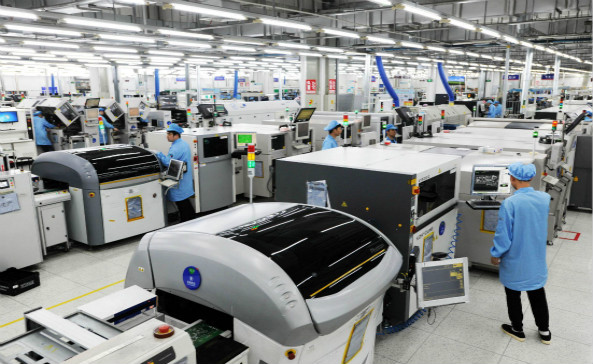
Choosing the right partner to handle the functions of electronics manufacturing services is the most important decision an OEM can make. Wintech stands out as a leader in this space, offering a comprehensive suite of services that cater to the most demanding industrial requirements. Our expertise in high-mix, low to mid volume production makes us the ideal choice for companies that prioritize precision and flexibility over raw volume.
Our services are designed to be a "one-stop shop" for all your electronics needs. From the initial PCB Design & Layout to the final Turnkey Box Build, we manage every detail with a focus on quality and innovation. Our long-term partnerships with Fortune 500 companies are a testament to our reliability and technical prowess. At Wintech, we don't just build products; we build the future of electronics.
Our complete range of services includes:
- PCB Design & Layout
- PCB Manufacturing
- PCB Assembly & PCBA SMT
- Quick Turn Fast PCB Prototype Assembly
- New Product Introduction NPI
- Plastic Molding
- Metal Precision Machining
- Enclosures & Racks & Frames
- Backplanes & Sever Chasis
- Cable Harness & Assembly
- Cabinet & Panel PLC Wiring
- Electro-Mechanical Assembly
- Turnkey Box Build
- Repair And Rework
12. Function Summary Table
| Service Category | Primary Functions | Value to OEM |
|---|---|---|
| Engineering & Design | PCB Layout, DfM, DfT, DfC, Signal Integrity Analysis | Reduces design errors and lowers manufacturing costs. |
| PCBA Manufacturing | SMT, Through-Hole, Selective Soldering, Coating | Ensures high-precision electronic connectivity and durability. |
| NPI & Prototyping | Quick-turn assembly, process validation, pilot runs | Accelerates time-to-market and proves design concept. |
| Mechanical Solutions | Plastic Molding, CNC Machining, Enclosures, Racks | Provides high-quality housing and structural integrity. |
| Full System Integration | Box Build, Cable Harnessing, PLC Wiring, Testing | Delivers finished, retail-ready products to the end-user. |
| Supply Chain | Sourcing, BOM optimization, Inventory management | Mitigates risk of component shortages and price spikes. |
| Aftermarket Support | Repair, Rework, Calibration, Refurbishing | Extends product life and supports sustainability goals. |
13. Frequently Asked Questions (FAQs)
While a Contract Manufacturer (CM) typically focuses on the physical assembly of products based on provided specs, an Electronics Manufacturing Services (EMS) provider offers a broader range of functions of electronics manufacturing services, including design, testing, supply chain management, and aftermarket repair. EMS providers act as full-lifecycle partners.
A turnkey box build saves money by consolidating the supply chain. Instead of the OEM paying for shipping, warehousing, and management for multiple separate components (PCB, case, cables, packaging), the EMS provider handles it all under one roof. This reduces overhead and eliminates the margin stack-up from multiple vendors.
DfM is critical because it identifies potential assembly issues while the product is still on the drawing board. By optimizing the PCB Layout for the manufacturing process, you can increase production speeds, reduce defect rates, and significantly lower the cost per unit.
Yes. Leading EMS providers like Wintech maintain certifications such as ISO 9001 and ISO 13485. They provide the necessary documentation and traceability required for products to pass UL, CE, and FDA inspections, ensuring your product is ready for global distribution.
14. References
By understanding and leveraging the diverse functions of electronics manufacturing services, your business can navigate the technical challenges of the modern market with confidence. Whether you are a startup looking for your first prototype or a global enterprise requiring a complex system integration, the right EMS partner will be the catalyst for your success.


