

Fast PCB Manufacturing Services and Production Time: A Comprehensive Guide
In the rapidly evolving world of electronics, time is the currency of innovation. Whether you are an IoT startup validating a new prototype or a global enterprise managing a complex supply chain, the ability to obtain Fast PCB manufacturing services is crucial. Reducing the time from design concept to physical board assembly can determine whether a product dominates the market or misses its window of opportunity.
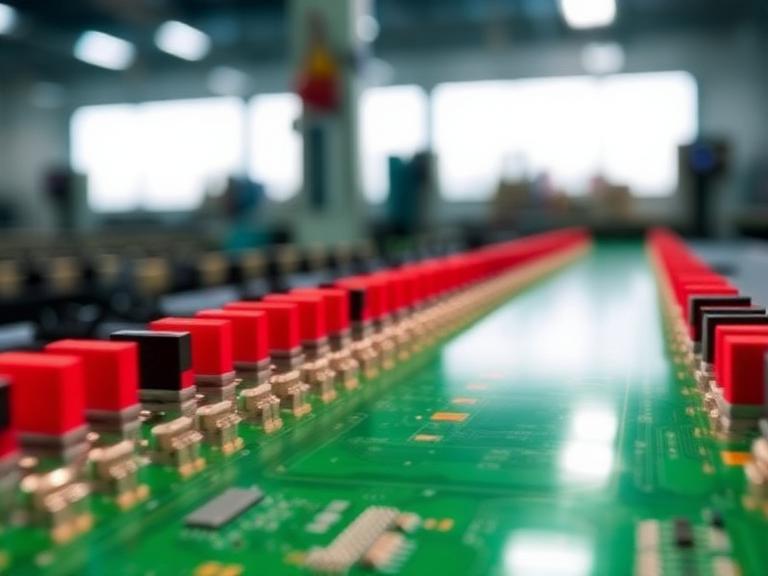
This comprehensive guide delves deep into the logistics, technologies, and strategies behind Fast PCB manufacturing. We will explore how leading providers like Wintech manage production times, the factors that influence delivery speeds, and how you can optimize your designs for rapid turnaround.
Table of Contents
- 1. The Critical Importance of Speed in Electronics
- 2. Wintech: Your Partner for Complex High-Mix Solutions
- 3. Defining Fast PCB Manufacturing Production Times
- 4. Quick Turn Fast PCB Prototype Assembly
- 5. Key Factors That Influence Manufacturing Speed
- 6. The Fabrication Process: Where Time is Won or Lost
- 7. The Advantage of Full Turnkey Services
- 8. Balancing Speed with Quality Assurance
- 9. Industries That Rely on Rapid PCB Production
- 10. Future Trends in PCB Automation
- 11. Summary: Standard vs. Fast Turn Timelines
- 12. Frequently Asked Questions (FAQs)
- 13. Conclusion
1. The Critical Importance of Speed in Electronics
The electronics industry operates on tight schedules. Fast PCB manufacturing is not merely a convenience; it is a strategic necessity. Engineers and product designers rely on quick fabrication to test functionalities, verify circuit designs, and debug hardware before committing to mass production. A delay of just a few days in the prototyping phase can cascade into weeks of delay for the final product launch.
However, "fast" does not simply mean rushing. True Fast PCB manufacturing involves optimized workflows, automated machinery, and precise supply chain management. It ensures that while the boards are produced quickly, they still meet IPC Class 2 or Class 3 standards for reliability and performance.
2. Wintech: Your Partner for Complex High-Mix Solutions

When selecting a manufacturer, capability is just as important as speed. You need a partner who can handle complexity without slowing down.
Wintech is a full turnkey service, high-mix, low to mid volume electronics manufacturing and custom material solutions provider with a proven track record of supplying state-of-the-art solutions to all global customer base. We provide tailor made solutions for our customers: high level, high difficult, large size, complex structure, high precision PCB Layout, PCBAs and turnkey complete products full systems electronic contract manufacturing solutions.
From prototyping to low to mid volume and mass production, many of world's top 500 enterprises have cooperated with us for many years, Wintech is worth relying on.
Wintech distinguishes itself by offering a holistic approach. By handling everything from the layout of complex structures to the final box-build assembly, they eliminate the communication gaps that often cause delays in Fast PCB manufacturing projects.
3. Defining Fast PCB Manufacturing Production Times
Production time in the PCB world is generally defined as the interval between the manufacturer verifying the Gerber files and the moment the boards are shipped. Understanding the tiers of service is essential for planning.
24-Hour Express
This is the fastest tier available, typically reserved for simple to moderately complex boards (2 to 6 layers). To achieve Fast PCB manufacturing within 24 hours, the facility must run 24/7. This service usually carries a premium cost but is invaluable when a deadline is imminent.
Standard Prototype (2-5 Days)
For standard prototyping, a 2 to 5-day window is common. This allows for standard queueing of the lamination, drilling, and plating processes without the need for expediting fees. It strikes a balance between cost and speed.
Standard Production (1-3 Weeks)
Once a design moves from prototype to mass production, the timeline shifts. Fast PCB manufacturing at scale requires material procurement, slotting into large-scale assembly lines, and rigorous post-production testing. Even here, "fast" services can reduce typical lead times from 4 weeks down to 10 days.
4. Quick Turn Fast PCB Prototype Assembly
Assembly is often the bottleneck in the manufacturing process. While fabricating the bare board might take two days, sourcing components and soldering them can take weeks if not managed correctly. Wintech specializes in accelerating this phase.
Quick Turn Fast PCB Prototype Assembly
Whether you are in a jam and you need your printed circuit board assemblies quickly, or you are in a rapid, fast-paced PCB Prototype Assembly environment and need a quick turn around on a regular basis, we are here to help. The final lead time will depend on the complexity and quantity of the PCB assemblies you need.
As circuit board assemblies get more complex (higher number of copper layers and component counts), the number of processes increase. Simple boards can be turned around next day, but more complex printed circuit boards will likely need longer lead times. PCB Prototype Assembly that can be hand soldered will have quicker turnarounds compared to assemblies that need stencils, SMT programming, and tooling.
By keeping a stock of common passive components and utilizing automated pick-and-place machines programmed for rapid changeovers, providers can deliver Fast PCB manufacturing results for assembled boards that rival bare board speeds.
5. Key Factors That Influence Manufacturing Speed
Several variables dictate exactly how fast your order can be processed. Being aware of these can help you design for faster manufacturing.
Layer Count and Lamination
A double-sided board requires a single lamination cycle. A generic multi-layer board (e.g., 4 or 6 layers) requires more complex alignment and pressing. High-density interconnect (HDI) boards with 10+ layers require sequential lamination cycles, which significantly adds to the production time. To ensure Fast PCB manufacturing, stick to standard stack-ups whenever possible.
Materials Availability
Using standard FR4 material ensures that the manufacturer has the substrate in stock. If your design requires exotic materials—such as Rogers for high-frequency applications, or polyimide for flex circuits—the lead time may be dictated by how quickly the manufacturer can procure these materials from their suppliers.
Via Technology
Standard through-hole vias are quick to drill. However, blind and buried vias require laser drilling and precise depth control, often followed by separate plating cycles. This adds complexity and time. For the absolute fastest turnaround, minimize the use of non-standard via structures.
6. The Fabrication Process: Where Time is Won or Lost
To appreciate Fast PCB manufacturing, one must look at the factory floor. The process involves several chemical and mechanical steps, all of which must be executed with precision.
- CAM Engineering: The process starts here. Engineers review files for Design for Manufacturing (DFM) issues. Quick responses to engineering queries (EQ) are vital for maintaining speed.
- Drilling and Plating: Automated drilling machines create holes, which are then plated with copper. High-speed spindles and automated loading systems speed this up.
- Imaging and Etching: Photoresist is applied and exposed to UV light. The unexposed copper is etched away. Modern Direct Imaging (LDI) eliminates the need for film, shaving hours off the process.
- Solder Mask and Silkscreen: These finishing layers are applied and cured. Digital inkjet printing for silkscreen is faster than traditional screening methods.
7. The Advantage of Full Turnkey Services
Traditionally, a customer might buy bare boards from one vendor, components from a distributor (like Digi-Key or Mouser), and then hire an assembly house to put it together. This fragmented supply chain is the enemy of Fast PCB manufacturing.
Full turnkey providers like Wintech manage the entire chain. They procure the bare boards and the components simultaneously. This parallel processing means that as soon as the bare boards come off the fabrication line, the components are ready and waiting at the assembly line. This approach can shave weeks off the total project timeline.
8. Balancing Speed with Quality Assurance
There is a misconception that Fast PCB manufacturing implies a drop in quality. This is not the case with reputable manufacturers. Speed is achieved through efficiency, not by cutting corners.
Regardless of the turnaround time, every board should undergo:
- E-Test (Electrical Testing): Flying probe testers check for shorts and opens.
- AOI (Automated Optical Inspection): Cameras check for etching defects or soldering errors.
- X-Ray Inspection: Essential for checking BGA (Ball Grid Array) components where solder joints are hidden.
Providers like Wintech maintain high precision even during rapid prototyping, ensuring that "fast" also means "functional."
9. Industries That Rely on Rapid PCB Production
Fast PCB manufacturing services are utilized across a broad spectrum of high-tech industries.
Medical Devices
In the medical field, rapid prototyping is used to develop life-saving equipment. From wearable monitors to complex imaging systems, speed allows for faster clinical trials and regulatory approval.
Automotive
With the shift toward Electric Vehicles (EVs) and autonomous driving, the automotive sector behaves more like the consumer electronics industry. Rapid iteration of ECUs and sensor arrays is critical.
Telecommunications
As 5G networks expand, infrastructure hardware requires high-speed, high-frequency boards. Fast PCB manufacturing enables telecom companies to upgrade networks with minimal downtime.
10. Future Trends in PCB Automation
The future of Fast PCB manufacturing lies in Industry 4.0. Smart factories are beginning to use AI to quote and schedule jobs automatically, optimizing panel utilization to reduce waste and wait times. Furthermore, additive manufacturing (3D printing of circuits) is emerging as a solution for ultra-fast prototyping of simple circuits, potentially bypassing traditional etching processes entirely.
11. Summary: Standard vs. Fast Turn Timelines
The table below provides a general comparison of timelines for different Fast PCB manufacturing service levels.
| Service Level | Typical Lead Time | Ideal Complexity | Best For |
|---|---|---|---|
| 24-Hour Express | 24 Hours | 2-4 Layers | Urgent repairs, proof of concept |
| Fast Prototype | 2-3 Days | 4-8 Layers | Standard R&D, design validation |
| Quick Turn Assembly | 1-5 Days | SMT + Thru-Hole | Complete functional prototypes |
| Expedited Production | 1-2 Weeks | High Volume | Market launch, inventory replenishment |
| Standard Production | 3-4 Weeks | Complex / High Vol | Cost optimization |
12. Frequently Asked Questions (FAQs)
A: Yes, expedited services typically incur a rush fee. This covers the cost of prioritizing the job on the production line and overtime labor if necessary. However, the ROI of hitting a market window often outweighs this cost.
A: Yes, but because HDI boards require sequential lamination and laser drilling, "fast" might mean 3-5 days rather than 24 hours, depending on the specific stack-up.
A: The industry standard is Gerber files (RS-274X). You should also provide a Bill of Materials (BOM) and Centroid files (Pick and Place) if assembly is required.
A: Wintech utilizes the same rigorous ISO-certified quality control processes for quick turn jobs as they do for mass production, including AOI and electrical testing.
13. Conclusion
In 2026 and beyond, the demand for Fast PCB manufacturing will only continue to grow. As devices become smaller, smarter, and more complex, the partnership you choose for your manufacturing needs becomes a pivotal element of your success. Whether you require a simple prototype turned around in 24 hours or a complex, high-mix assembly delivered in days, understanding the capabilities of your manufacturer is key.
Wintech stands ready to support your most challenging projects with speed, precision, and reliability. Don't let manufacturing delays hold back your innovation.


