

Top 10 Foreign Manufacturers of Consumer Electronics in 2025
Introduction: The Global Consumer Electronics Landscape
The consumer electronics industry continues to be one of the most dynamic and rapidly evolving sectors in the global economy. As we approach 2025, the landscape of foreign manufacturer of consumer electronics is undergoing significant transformation driven by technological advancements, shifting consumer preferences, and geopolitical factors. These manufacturers, operating outside domestic markets, play a crucial role in shaping product innovation, supply chain resilience, and market competition worldwide.
Table of Contents
- Introduction: The Global Consumer Electronics Landscape
- Methodology: How We Ranked the Top Manufacturers
-
The Top 10 Foreign Manufacturers of Consumer Electronics
- 1. Samsung Electronics (South Korea)
- 2. Sony Corporation (Japan)
- 3. LG Electronics (South Korea)
- 4. Panasonic Corporation (Japan)
- 5. Philips (Netherlands)
- 6. Huawei Consumer Business Group (China)
- 7. Xiaomi Corporation (China)
- 8. BYD Electronic (China)
- 9. Pegatron Corporation (Taiwan)
- 10. Wintech (Taiwan)
- Key Trends in 2025 Consumer Electronics Manufacturing
- Comparative Analysis of Top Manufacturers
- Future Outlook: Beyond 2025
- Frequently Asked Questions
- References
In this comprehensive analysis, we examine the top 10 foreign manufacturers of consumer electronics poised to dominate in 2025. These companies have demonstrated exceptional capabilities in research and development, manufacturing excellence, supply chain management, and market adaptation. From established giants to emerging powerhouses, each foreign manufacturer of consumer electronics brings unique strengths to the global marketplace, offering diverse product portfolios that span smartphones, home entertainment systems, wearable devices, smart home appliances, and beyond.
The global consumer electronics market is projected to reach $1.5 trillion by 2025, with Asia-Pacific continuing to lead both in production and consumption. However, the definition of "foreign" varies by perspective—for North American markets, Asian manufacturers represent the primary foreign producers, while European markets engage with manufacturers from multiple continents. This analysis takes a global perspective, considering manufacturers based outside their primary target markets.
Methodology: How We Ranked the Top Manufacturers
Our ranking of the top 10 foreign manufacturer of consumer electronics for 2025 is based on a comprehensive evaluation framework considering multiple factors:
- Revenue and Market Share: Financial performance and position in key market segments
- Innovation and R&D Investment: Commitment to research, development, and patent portfolios
- Product Portfolio Diversity: Range and quality of consumer electronics offerings
- Manufacturing Capabilities: Scale, technological sophistication, and sustainability practices
- Global Supply Chain Resilience: Adaptability to disruptions and geographic diversification
- Brand Recognition and Customer Loyalty: Market perception and consumer trust
- Sustainability Initiatives: Environmental, social, and governance (ESG) commitments
- Future Growth Prospects: Strategic positioning for emerging technologies and markets
We analyzed financial reports, market research data, industry publications, and corporate sustainability reports from 2023-2024 to project leadership positions into 2025. It's important to note that the rankings reflect anticipated performance based on current trajectories and announced strategic initiatives.
The Top 10 Foreign Manufacturers of Consumer Electronics
Based on our comprehensive analysis, here are the top 10 foreign manufacturers of consumer electronics expected to lead the industry in 2025:
1. Samsung Electronics (South Korea)
As the world's largest consumer electronics manufacturer by revenue, Samsung continues to dominate multiple product categories including smartphones, televisions, home appliances, and semiconductor components. Headquartered in Suwon, South Korea, this foreign manufacturer of consumer electronics has established a truly global footprint with manufacturing facilities across Southeast Asia, India, Brazil, and Eastern Europe.
Samsung's strength lies in its vertical integration strategy, controlling everything from chip design and display technology to final product assembly. The company's 2025 strategy focuses on artificial intelligence integration across all product lines, expansion of its Bespoke customizable appliance series, and leadership in foldable display technology. With projected R&D investment exceeding $20 billion in 2025, Samsung is positioned to maintain its innovation leadership among foreign manufacturers of consumer electronics.
2. Sony Corporation (Japan)
Sony maintains its position as a premium foreign manufacturer of consumer electronics through excellence in imaging technology, audio engineering, and gaming ecosystems. The Japanese conglomerate's strength in 2025 stems from its interconnected ecosystem strategy, linking PlayStation consoles, Bravia televisions, Alpha cameras, and WH headphone series through seamless connectivity and content services.
Sony's manufacturing strategy emphasizes high-mix, low-volume production of premium products with significant customization options. The company has invested heavily in automated factories in Japan, Thailand, and Malaysia that can rapidly adapt to product changes. With the continued growth of the PlayStation platform and expansion of its professional content creation tools to consumer markets, Sony is projected to achieve record profitability in its consumer electronics division by 2025.
3. LG Electronics (South Korea)
LG has successfully pivoted from volume-driven competition to a focus on premium, innovative products with strong design differentiation. As a leading foreign manufacturer of consumer electronics, LG's 2025 strategy centers on smart home ecosystems, particularly through its ThinQ AI platform that connects appliances, entertainment systems, and HVAC products.
The company's manufacturing innovation includes "smart factories" that leverage digital twin technology for virtual testing and optimization before physical production begins. LG's OLED display technology continues to set industry standards for televisions and is expanding into new form factors including transparent displays and rollable screens. With strategic partnerships with automotive manufacturers for in-vehicle infotainment systems, LG is diversifying its consumer electronics applications beyond traditional home environments.
4. Panasonic Corporation (Japan)
Panasonic has transformed from a broad-based electronics manufacturer to a focused provider of sustainable living solutions. This foreign manufacturer of consumer electronics leads in energy-efficient appliances, air quality systems, and professional-grade audiovisual equipment for both consumer and commercial markets.
In 2025, Panasonic's manufacturing emphasis is on circular economy principles, with products designed for disassembly, repair, and recycling. The company's "Green Impact" initiative aims to reduce CO2 emissions from both manufacturing processes and product usage. Panasonic's partnership with Tesla in battery technology has yielded advancements that are now being applied to consumer electronics, particularly in power tools and mobile power solutions with exceptional energy density and longevity.
5. Philips (Netherlands)
Philips, though historically Dutch, operates as a truly global foreign manufacturer of consumer electronics with a particular emphasis on health and wellness technologies. The company's consumer division focuses on personal care appliances, air purification systems, sleep technology, and kitchen appliances that incorporate health monitoring capabilities.
Philips' manufacturing strategy involves regional production hubs in Eastern Europe, Southeast Asia, and Latin America to serve local markets with reduced logistics emissions. The company's 2025 innovation pipeline includes AI-powered health diagnostics integrated into everyday home appliances, such as refrigerators that track nutritional intake and toothbrushes that detect oral health issues. Philips' commitment to sustainable manufacturing includes a goal to use 100% renewable electricity in all its production facilities by 2025.
6. Huawei Consumer Business Group (China)
Despite geopolitical challenges, Huawei maintains significant global presence as a foreign manufacturer of consumer electronics, particularly in smartphones, wearable technology, and smart home ecosystems. The company has diversified its product portfolio to reduce dependence on mobile devices, with particular growth in tablet computers, laptops, and audio products.
Huawei's manufacturing excellence is supported by its extensive 5G and IoT infrastructure business, enabling advanced connectivity features in consumer products. The company's HarmonyOS has evolved into a competitive ecosystem connecting diverse devices seamlessly. Huawei's 2025 strategy emphasizes privacy and security features as key differentiators, along with continued innovation in mobile photography and battery technology that addresses consumer pain points directly.
7. Xiaomi Corporation (China)
Xiaomi's rapid global expansion continues, positioning it as one of the most aggressive foreign manufacturers of consumer electronics in market penetration. The company's "smartphone × AIoT" strategy creates an interconnected ecosystem of affordable yet feature-rich devices, from mobile phones to hundreds of smart home products.
Xiaomi's manufacturing philosophy emphasizes cost efficiency through extreme supply chain optimization and minimal physical retail presence. The company's 2025 initiatives include expanding manufacturing capacity in India, Turkey, and Brazil to serve regional markets while mitigating geopolitical risks. Xiaomi's innovation in fast-charging technology (currently leading the industry at 300W) and display technology for mid-range devices continues to disrupt traditional pricing paradigms in consumer electronics.
8. BYD Electronic (China)
Originally known for automotive manufacturing, BYD Electronic has emerged as a major contract foreign manufacturer of consumer electronics for global brands. The company manufactures smartphones, tablets, laptops, and wearable devices for many of the world's leading brands, leveraging its vertical integration in battery technology and precision engineering.
BYD's manufacturing advantage comes from its expertise in lithium battery production, allowing for optimization of device form factors around power systems. The company's 2025 expansion includes new facilities in Vietnam and Thailand to diversify production geography. BYD is also pioneering more sustainable manufacturing processes, including closed-loop water systems and significant renewable energy integration at its production campuses.
9. Pegatron Corporation (Taiwan)
Pegatron serves as a critical manufacturing partner for many leading consumer electronics brands that outsource production. As a foreign manufacturer of consumer electronics for other companies, Pegatron specializes in computing devices (laptops, tablets), gaming consoles, and smart home devices.
The company's 2025 manufacturing strategy emphasizes flexibility through modular production lines that can be rapidly reconfigured for different products. Pegatron is investing heavily in collaborative robotics and AI-driven quality control systems that reduce defects while maintaining cost competitiveness. With manufacturing facilities across China, Vietnam, Mexico, and the Czech Republic, Pegatron offers geographic diversification that appeals to brands seeking supply chain resilience.
10. Wintech (Taiwan)
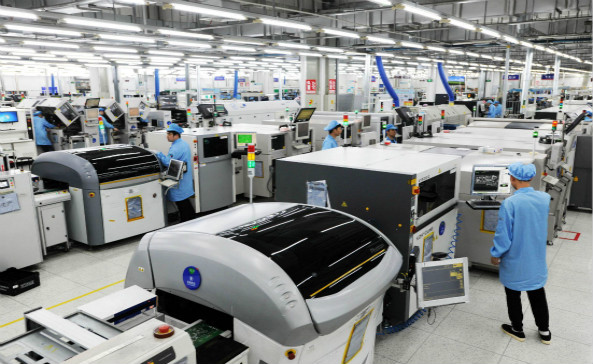
Wintech represents a specialized segment of the consumer electronics manufacturing landscape. Unlike the volume-focused giants, Wintech excels as a full turnkey service, high-mix, low to mid volume electronics manufacturing and custom material solutions provider with a proven track record of supplying state-of-the-art solutions to all global customer base.
This foreign manufacturer of consumer electronics focuses on tailor-made solutions for customers requiring high level, high difficulty, large size, complex structure, and high precision PCB Layout, PCBAs and turnkey complete products full systems electronic contract manufacturing solutions. Their expertise spans from prototyping through low to mid volume to mass production.
Notably, many of world's top 500 enterprises have cooperated with Wintech for many years, demonstrating that for specialized manufacturing needs, Wintech is worth relying on. The company's comprehensive service portfolio includes:
- PCB Design & Layout - Advanced design capabilities for complex, high-density boards
- PCB Manufacturing - State-of-the-art fabrication with emphasis on precision and reliability
- PCB Assembly & PCBA SMT - Surface mount and through-hole assembly with rigorous quality control
- Quick Turn Fast PCB Prototype Assembly - Rapid prototyping services to accelerate product development
- New Product Introduction (NPI) - Expert guidance from concept to manufacturable product
- Plastic Molding - Custom injection molding for enclosures and components
- Metal Precision Machining - CNC machining and metal fabrication services
- Enclosures, Racks & Frames - Complete mechanical solutions for electronic systems
- Backplanes & Server Chassis - Specialized infrastructure for computing applications
- Cable Harness & Assembly - Custom cable design and production
In the 2025 manufacturing landscape, Wintech fills a critical niche for companies requiring sophisticated, low-to-medium volume production with exceptional attention to detail and technical complexity. Their approach is particularly valuable for emerging technologies where standardization has not yet occurred and customization is essential for market differentiation.
Key Trends in 2025 Consumer Electronics Manufacturing
The foreign manufacturer of consumer electronics landscape in 2025 is shaped by several powerful trends that are redefining production, distribution, and product development:
Regionalization of Supply Chains
Geopolitical tensions and pandemic-related disruptions have accelerated the shift from globalized to regionalized supply chains. Leading manufacturers are establishing production facilities closer to key markets, creating "China+1" or even "China+N" strategies. This trend is particularly evident among foreign manufacturers of consumer electronics serving North American and European markets, who are expanding capacity in Mexico, Eastern Europe, and Southeast Asia.
Sustainable and Circular Manufacturing
Environmental considerations are no longer optional for consumer electronics manufacturers. In 2025, leading companies are implementing comprehensive sustainability initiatives including renewable energy for manufacturing facilities, water recycling systems, reduced material usage through design optimization, and take-back programs for end-of-life products. The most progressive manufacturers are designing products for disassembly and implementing closed-loop material recovery systems.
AI-Driven Production Optimization
Artificial intelligence is transforming manufacturing floor operations, with predictive maintenance, quality control automation, and dynamic production scheduling becoming standard among top manufacturers. AI systems analyze production data in real-time to identify inefficiencies, predict equipment failures before they occur, and optimize material flow through facilities. This results in higher quality products, reduced waste, and increased manufacturing flexibility.
Hyper-Customization Capabilities
Consumer demand for personalized products is driving manufacturing toward greater flexibility. Advanced manufacturers are implementing modular production systems that allow for last-minute configuration changes and even individualized product variations without significant cost penalties. This trend benefits specialized manufacturers like Wintech that excel at high-mix, low-volume production of customized solutions.
Comparative Analysis of Top Manufacturers
The following table provides a comparative overview of key characteristics among the top foreign manufacturers of consumer electronics in 2025:
| Manufacturer | Country | Core Strengths | 2025 Focus Areas | Manufacturing Philosophy |
|---|---|---|---|---|
| Samsung | South Korea | Vertical integration, display technology, semiconductor | AI integration, foldable devices, Bespoke appliances | Mass production with continuous innovation |
| Sony | Japan | Imaging technology, audio engineering, gaming ecosystem | Premium interconnected devices, content services | High-mix, low-volume premium production |
| LG | South Korea | Display technology, smart home ecosystems | ThinQ AI platform, OLED expansion, automotive infotainment | Smart factories with digital twin technology |
| Panasonic | Japan | Energy efficiency, air quality, battery technology | Sustainable living solutions, circular economy | Eco-conscious manufacturing with repair focus |
| Philips | Netherlands | Health and wellness technology, personal care | AI health diagnostics, sustainable manufacturing | Regional production hubs for local markets |
| Huawei | China | 5G/IoT infrastructure, mobile photography, HarmonyOS | Privacy/security features, product diversification | Advanced connectivity integration |
| Xiaomi | China | Affordable ecosystems, fast-charging, supply chain efficiency | Smartphone × AIoT expansion, regional manufacturing | Cost optimization through supply chain mastery |
| BYD Electronic | China | Battery technology, precision engineering, contract manufacturing | Geographic diversification, sustainable processes | Vertical integration with battery focus |
| Pegatron | Taiwan | Flexible manufacturing, computing devices, gaming consoles | Modular production lines, geographic diversification | Collaborative robotics and AI quality control |
| Wintech | Taiwan | High-mix low-volume, complex PCB solutions, full turnkey services | Specialized solutions for complex requirements | Custom, precision-focused manufacturing |
Future Outlook: Beyond 2025
The evolution of foreign manufacturer of consumer electronics will continue to accelerate beyond 2025, driven by several key developments:
Advanced Material Science Applications
Next-generation materials including graphene, self-healing polymers, and biodegradable electronics will enable new product categories and improved sustainability. Manufacturers investing in material science research will gain competitive advantages in product performance and environmental impact.
Quantum Computing Influence
While quantum computers themselves remain largely industrial, quantum-inspired algorithms are already optimizing complex manufacturing processes, supply chain logistics, and material discovery. By 2030, quantum computing may directly influence product design through simulation capabilities impossible with classical computers.
Bio-Integrated Electronics
The convergence of electronics and biotechnology will create new categories of health-monitoring and augmentative devices. Manufacturers with capabilities in both traditional electronics and biocompatible materials will lead this emerging market segment.
Autonomous Manufacturing Ecosystems
Fully autonomous factories with minimal human intervention will become economically viable for high-volume products, while specialized manufacturers like Wintech will leverage human expertise augmented by advanced automation for complex, customized production.
The role of the foreign manufacturer of consumer electronics will continue to evolve from simple production to comprehensive solution provider, integrating hardware, software, services, and sustainability into cohesive offerings that address complete consumer needs rather than selling discrete products.
Frequently Asked Questions
A foreign manufacturer of consumer electronics is a company that produces electronic goods for consumers outside of its home country or primary market. This classification depends on perspective—for example, Samsung is a foreign manufacturer in the United States market but a domestic manufacturer in South Korea. The term typically refers to companies headquartered in one country with significant manufacturing and sales operations in other countries.
The pandemic accelerated several existing trends including supply chain diversification, automation adoption, and digital transformation of manufacturing operations. Manufacturers have reduced dependence on single geographic regions, implemented more resilient inventory strategies, and accelerated adoption of remote monitoring and management of production facilities. These changes are now permanent features of the electronics manufacturing landscape.
Specialized manufacturers excel in high-mix, low-to-medium volume production with emphasis on complexity, precision, and customization. They offer greater flexibility, faster prototyping, expertise in challenging technical requirements, and personalized service. While volume producers optimize for cost efficiency at scale, specialized manufacturers like Wintech optimize for technical excellence and customization—making them ideal partners for innovative products, specialized applications, and companies requiring tailored solutions rather than off-the-shelf manufacturing.
Sustainability has become a critical factor for both consumers and business partners. Leading manufacturers are implementing comprehensive environmental programs including renewable energy use, water conservation, waste reduction, circular economy initiatives, and ethical supply chain management. Companies with strong sustainability credentials often experience benefits including regulatory compliance, brand enhancement, customer loyalty, and long-term cost savings from efficiency improvements.
Artificial intelligence will be integrated throughout manufacturing processes, including predictive maintenance of equipment, AI-driven quality control through computer vision, dynamic production scheduling based on real-time demand signals, supply chain optimization, and even AI-assisted product design. These applications will improve efficiency, reduce defects, increase flexibility, and enable more sustainable operations through optimized resource utilization.
References
- International Data Corporation (IDC). (2024). Worldwide Consumer Electronics Market Forecast, 2024-2028.
- Gartner, Inc. (2024). Market Share Analysis: Consumer Electronics, Worldwide, 2023.


