

How EMS Providers Manage Electronic Component Sourcing Risks
ELECTRONIC MANUFACTURING | COMPONENT SOURCING | SUPPLY CHAIN RISK MANAGEMENT
Electronic component sourcing is one of the biggest variables affecting electronic manufacturing cost, production continuity, and product quality. A single unavailable microcontroller, discontinued power-management IC, or delayed connector shipment can hold up an entire PCB assembly order, even when every other component is ready.
For OEMs, choosing an Electronic Manufacturing Services (EMS) provider should therefore involve more than comparing assembly prices. The provider must demonstrate how it identifies supply risks, verifies component authenticity, manages approved suppliers, handles shortages, and protects production schedules when the market changes.

From our experience in PCB manufacturing and assembly, effective sourcing risk management is not a purchasing department activity performed after a shortage appears. It is an engineering, procurement, quality, and production control process that begins during product design and continues throughout the product lifecycle.
Quick Answer: How Do EMS Providers Manage Electronic Component Sourcing Risks?
Professional EMS providers manage electronic component sourcing risks through supplier qualification, authorized distribution channels, BOM risk analysis, component lifecycle monitoring, multi-source strategies, inventory planning, incoming inspection, and engineering change control.
- Prevent shortages: Identify long-lead-time, allocation-prone, and single-source components before production.
- Reduce counterfeit exposure: Prioritize authorized distributors and apply traceability and inspection controls.
- Control costs: Monitor price volatility, minimum order quantities, excess inventory, and obsolescence exposure.
- Protect quality: Verify manufacturer part numbers, specifications, revisions, and approved alternatives.
- Maintain delivery: Use demand forecasting, buffer stock where justified, and shortage escalation procedures.
- Manage substitutions: Obtain engineering approval before changing any component that could affect performance, safety, compliance, or reliability.
Our recommendation: Choose an EMS provider that can show a documented sourcing process and connect procurement decisions directly to engineering and quality management. A low component quotation is not a competitive advantage if it creates production delays or unverified substitutions.
Quick Summary: Electronic Component Sourcing Risk Management
| Sourcing Risk | Typical Business Impact | How EMS Providers Manage It | Priority |
|---|---|---|---|
| Component shortages | Production delays and missed delivery dates | Forecasting, supplier diversification, inventory planning | Critical |
| Counterfeit components | Field failures, quality issues, compliance exposure | Authorized sourcing, traceability, risk-based inspection | Critical |
| Price volatility | Unplanned BOM cost increases | Price monitoring, quotation validity controls, purchasing agreements | High |
| Component obsolescence | Redesign costs and production interruption | Lifecycle monitoring, last-time-buy planning, redesign strategies | High |
| Single-source dependency | Limited purchasing flexibility | Approved second sources and alternate-part qualification | High |
| Supplier quality problems | Assembly defects, rework and product returns | Supplier qualification, incoming inspection, corrective action | Critical |
| Logistics disruption | Uncertain material arrival and schedule changes | Regional sourcing options, logistics tracking, contingency stock | High |
Table of Contents
- What Is Electronic Component Sourcing Risk?
- Why Component Sourcing Risks Matter to OEMs
- 8 Major Electronic Component Sourcing Risks
- 10 Ways EMS Providers Manage Sourcing Risks
- How to Evaluate an EMS Provider's Sourcing Capabilities
- Authorized, Independent and Hybrid Sourcing Compared
- BOM Risk Analysis and Alternative Component Management
- Cost-Benefit Analysis of Strategic Sourcing
- How Wintech Supports PCB Manufacturing and Supply Chain Management
- Common Sourcing Risk Management Mistakes
- Expert Recommendations for OEMs
- Frequently Asked Questions
- References
1. What Is Electronic Component Sourcing Risk?
Electronic component sourcing risk refers to the possibility that an EMS provider cannot obtain the correct electronic components, at the required quality, quantity, price, and delivery time, to support a customer's manufacturing schedule.
These risks affect both the procurement process and the engineering decisions behind a product. A component can be commercially available but technically unsuitable. Another part may meet every electrical specification but have an uncertain supply history or be approaching end-of-life.
In practical manufacturing, sourcing risk is therefore broader than checking whether a supplier has stock.
What Is Included in Component Sourcing Risk?
- Availability risk: The required component is unavailable or subject to allocation.
- Authenticity risk: Components may be counterfeit, remarked, refurbished, or improperly represented.
- Technical compatibility risk: A substitute may not meet the original design requirements.
- Commercial risk: Prices, payment terms, minimum order quantities, or quotation validity may change.
- Lifecycle risk: Components may become obsolete or enter a last-time-buy period.
- Supplier dependency risk: A design relies on one manufacturer or distribution channel.
- Logistics risk: Shipping delays, customs issues, or regional disruptions affect material availability.
For OEMs, these risks can become expensive because electronic assemblies are interdependent. If one critical IC is missing, having 99% of the remaining BOM available may not allow the assembly line to complete the product.
How Does EMS Sourcing Risk Management Work?
An EMS provider normally combines procurement data, engineering knowledge, supplier performance information, inventory records, and quality inspection results to assess risk.
The process begins with the customer's Bill of Materials (BOM). The EMS team checks component specifications, manufacturers, lifecycle status, sourcing channels, lead times, and potential alternatives. It then develops a procurement plan based on production demand and risk exposure.
When a shortage occurs, the provider should escalate the issue, identify technically acceptable options, obtain the required approvals, and document any sourcing or engineering changes.
2. Why Electronic Component Sourcing Risks Matter to OEMs
Component sourcing directly influences whether an OEM can manufacture products consistently and meet customer delivery commitments. The impact is not limited to procurement costs.
Production Continuity
A shortage of one critical component can stop an entire production order. This is particularly problematic for products containing specialized processors, RF components, power semiconductors, memory devices, or custom connectors.
For example, an industrial controller may require a specific microcontroller that is difficult to replace because its firmware, pin configuration, peripheral functions, and operating temperature range are tied to the original design.
Even if a substitute appears electrically similar, the engineering validation required to approve it may take longer than the purchasing team expects.
Product Quality and Reliability
Unverified sourcing creates risks that may not become visible during initial assembly. Components with questionable provenance or inconsistent storage conditions can cause intermittent failures, premature degradation, or unexpected field returns.
For high-reliability applications, traceability is particularly important. OEMs should know which component manufacturer and lot were used in a production batch and how any sourcing exceptions were approved.
Manufacturing Cost and Profitability
Component shortages can lead to spot-market purchasing, expedited freight, production rescheduling, and excess inventory. These expenses can quickly eliminate the apparent savings from selecting a low-cost EMS quotation.
In most professional situations, total landed cost and supply continuity are better purchasing indicators than the lowest individual component price.
Customer Delivery Commitments
OEMs often plan product launches, distribution schedules, and customer installations around an agreed manufacturing lead time. When components arrive late, the consequences may extend into the customer's own operations.
That is why experienced EMS providers include component availability in production planning rather than treating procurement as a separate activity.
3. Eight Major Electronic Component Sourcing Risks EMS Providers Must Control
1. Semiconductor and Passive Component Shortages
Supply shortages can affect microcontrollers, memory, analog ICs, power devices, capacitors, resistors, connectors, and other BOM items.
Shortages may arise from demand surges, manufacturing capacity constraints, geographic disruptions, allocation policies, or changes in product lifecycle.
Professional response: Identify critical components early, monitor supplier lead times, assess alternate manufacturers, and prioritize procurement based on production demand.
2. Counterfeit and Nonconforming Components
Counterfeit components are a serious concern when purchasing through unfamiliar or unauthorized channels. Risks include incorrect marking, recycled parts, altered date codes, and components that do not meet the advertised specifications.
These parts may pass a basic visual check but fail during electrical testing or under actual operating conditions.
Professional response: Prioritize authorized distribution, retain purchasing documentation, establish traceability, and apply risk-based inspection or testing when sourcing conditions justify additional verification.
3. Component Price Fluctuations
Electronic component prices can change because of market demand, manufacturer pricing adjustments, currency movements, inventory availability, and supply constraints.
A quotation that was competitive when the BOM was first reviewed may no longer reflect the actual procurement cost when production begins.
Professional response: Establish quotation validity periods, monitor high-value components, evaluate volume purchasing agreements, and communicate material price changes before order commitment.
4. Component Obsolescence and End-of-Life Notices
Electronic components have product lifecycles. Manufacturers may announce that a part is being discontinued, restrict future orders, or establish a last-time-buy deadline.
This is especially important for industrial electronics, medical equipment, infrastructure products, and other systems that may remain in production for many years.
Professional response: Monitor product lifecycle information, identify replacement candidates, and plan last-time buys only after reviewing realistic demand, storage conditions, and remaining product support requirements.
5. Single-Source Dependency
When a design relies on one manufacturer or one supply channel, the OEM has limited flexibility if the source becomes unavailable.
However, forcing multiple sources into every BOM is not always practical. Some microcontrollers, RF devices, and specialized power components have unique functions or firmware dependencies.
Professional response: Prioritize second-source development for high-risk components and distinguish between parts that are genuinely interchangeable and those that require engineering redesign.
6. Supplier Quality and Delivery Performance
A supplier may offer attractive prices but perform inconsistently in quality, documentation, packaging, or delivery reliability.
Repeated late deliveries create production uncertainty, while poor component handling can introduce moisture sensitivity, electrostatic discharge, oxidation, or mechanical damage.
Professional response: Evaluate suppliers using documented performance criteria, including on-time delivery, defect rates, responsiveness, traceability, and corrective action effectiveness.
7. International Logistics and Trade Disruptions
Cross-border electronic component sourcing involves transportation, customs clearance, documentation, regulatory requirements, and exposure to regional disruptions.
A component that is available at a distributor's warehouse may still miss the production schedule if shipping arrangements are not planned correctly.
Professional response: Track material shipments, verify documentation, assess alternative logistics routes, and build realistic lead-time allowances for critical materials.
8. Incorrect or Unauthorized Component Substitution
This is one of the most underestimated risks in contract manufacturing. A substitute component may appear similar based on package size or basic electrical specifications but behave differently in the actual circuit.
Differences in pinout, timing, thermal characteristics, tolerances, firmware compatibility, qualification status, or long-term reliability can affect the finished product.
Professional response: Require engineering review and customer approval before implementing substitutions that affect the approved BOM or product requirements.
4. Ten Ways EMS Providers Manage Electronic Component Sourcing Risks
Effective sourcing management requires a structured process rather than a collection of emergency purchasing decisions. The following practices are particularly important when an EMS provider handles prototype development, PCB assembly, and recurring mass production.
1. Conduct BOM Risk Analysis Before Production
The BOM is the foundation of electronic component procurement. A professional EMS provider should review it before issuing a production quotation or confirming a delivery schedule.
The review should identify:
- Manufacturer and manufacturer part number.
- Component lifecycle status.
- Availability and quoted lead time.
- Authorized sourcing options.
- Single-source and allocation exposure.
- Minimum order quantity and purchasing constraints.
- Potentially acceptable alternative components.
High-risk components should be highlighted for additional review. This allows engineering and procurement teams to address problems before production materials are committed.
2. Develop a Qualified Supplier Network
Supplier diversification reduces dependence on individual purchasing channels, but it must be managed carefully.
EMS providers should evaluate suppliers based on product authenticity controls, quality history, financial and operational stability, documentation, delivery performance, and responsiveness.
Authorized distributors are generally the preferred channel for traceable purchases. Independent distributors may sometimes be necessary for obsolete or constrained parts, but they require a more rigorous risk assessment.
For OEMs, the important question is not how many suppliers an EMS company claims to have. It is whether those suppliers are qualified for the components and risk levels involved.
3. Prioritize Authorized Distribution Channels
Purchasing through authorized distributors or directly from manufacturers generally offers stronger traceability and clearer supply-chain documentation than purchasing from unknown market sources.
However, authorized sourcing does not remove every risk. Incorrect ordering, storage damage, handling issues, and documentation errors can still occur.
We recommend that EMS providers maintain purchasing records linking manufacturer part numbers, supplier details, lot or date-code information where available, and receiving inspection records.
4. Monitor Component Lead Times and Availability
Component availability should be reviewed throughout the order lifecycle. A lead time quoted during initial design may change before mass production begins.
Procurement teams should monitor critical components at defined intervals and escalate any significant change that could affect the production schedule.
For long-lead-time items, early purchasing may be justified when the customer has approved the forecast and inventory exposure is controlled.
5. Maintain Strategic Safety Stock
Safety stock can protect production against normal supply fluctuations, but holding inventory has a cost.
Excess stock ties up working capital and creates risks when product demand changes, components become obsolete, or engineering revisions make existing inventory unusable.
We recommend targeted safety stock rather than applying the same inventory policy to every component.
For example, a low-cost resistor with several approved sources may not justify substantial buffer stock. A long-lead-time microcontroller with no qualified alternative may justify a carefully calculated reserve.
6. Establish Approved Alternative Components
Alternative component planning is one of the most useful ways to reduce supply risk, but it should begin during engineering design whenever possible.
Potential alternatives must be evaluated for electrical characteristics, package dimensions, pin compatibility, thermal performance, operating temperature, qualification status, and application requirements.
Where necessary, the engineering team should conduct schematic review, PCB footprint checks, prototype testing, and functional validation.
An alternative should not become an approved production component simply because a supplier confirms that it is available.
7. Use Demand Forecasting and Production Planning
EMS procurement teams need visibility into expected production quantities, order schedules, and changes in customer demand.
Forecasting helps identify when component purchasing should begin and whether a material shortage is likely to affect future orders.
For OEMs with recurring production, sharing rolling forecasts and communicating design changes early can significantly improve procurement planning.
8. Apply Incoming Quality Inspection and Traceability
Incoming inspection should be based on component risk, supplier history, sourcing channel, and application requirements.
Depending on the situation, controls may include:
- Part-number and manufacturer verification.
- Packaging and labeling inspection.
- Lot and date-code documentation.
- Moisture-sensitive device packaging checks.
- Electrostatic discharge handling controls.
- Risk-based authenticity testing and electrical verification.
For higher-risk parts, additional laboratory testing or third-party inspection may be appropriate. No single visual inspection method can reliably establish the authenticity of every electronic component.
9. Control Engineering Changes and Procurement Substitutions
Procurement decisions must remain connected to engineering change management.
When an original component becomes unavailable, the EMS provider should document the problem, identify proposed alternatives, assess technical differences, and submit the change for the required approval.
After approval, the BOM, purchasing records, production documentation, and inspection requirements should be updated consistently.
This prevents different production batches from using undocumented component versions.
10. Build a Supply Chain Contingency Plan
A sourcing strategy is incomplete without a response plan for major disruptions.
The plan should identify critical components, escalation responsibilities, alternative purchasing channels, approved substitutes, customer communication requirements, and the potential impact on production commitments.
For commercial manufacturing, we recommend reviewing contingency plans periodically rather than waiting until a major shortage forces an emergency response.
5. How to Evaluate an EMS Provider's Electronic Component Sourcing Capabilities
OEMs should not evaluate an EMS provider solely on its assembly equipment or quoted labor cost. Procurement capability is a major factor in manufacturing reliability.
During supplier evaluation, ask for evidence of how the company handles the following areas.
Supplier Qualification and Procurement Transparency
Ask whether the provider prioritizes authorized distribution and how it qualifies independent suppliers when necessary.
Find out whether purchasing records and traceability documentation can be linked to specific production orders. A reliable EMS partner should be able to explain its sourcing process clearly.
Engineering Support for Component Alternatives
Ask whether the EMS provider has engineering resources capable of reviewing alternative parts.
This matters because procurement staff may identify an available component, but only a qualified engineering review can determine whether it is appropriate for the design.
Review the provider's engineering capabilities to understand how design support, PCB layout, and manufacturing considerations can be coordinated.
Quality Management and Traceability
Ask how incoming materials are inspected, how nonconforming parts are handled, and how corrective actions are documented.
For demanding applications, evaluate whether the supplier has an established quality management system and can demonstrate controls appropriate to the product's industry and risk profile.
Wintech's quality assurance approach is a useful starting point for understanding the quality processes relevant to PCB manufacturing and assembly.
Supply Chain Visibility
Ask how often the EMS provider updates material availability, how it reports shortages, and whether customers receive advance notice of sourcing problems.
Good communication should include the affected part, production quantity, expected impact, available options, and the decision required from the customer.
Manufacturing and Procurement Integration
Component sourcing should not operate independently from PCB fabrication and assembly planning.
For example, a PCB may be ready for assembly while critical components remain unavailable. The provider should be able to coordinate fabrication schedules, material procurement, assembly capacity, and final delivery.
When comparing potential suppliers, review their manufacturing scope and capabilities, including the range of electronic PCB board manufacturers and manufacturing options relevant to your project.
6. Authorized, Independent and Hybrid Component Sourcing Compared
Not all electronic component sourcing channels offer the same balance of availability, cost, traceability, and risk. An experienced EMS provider selects the purchasing channel based on the specific component and application.
| Sourcing Model | Availability | Traceability | Cost Consideration | Best Use Case |
|---|---|---|---|---|
| Authorized distributor | Depends on stock and allocation | Generally strongest purchasing traceability | May not offer the lowest market price | Standard production and critical components |
| Direct manufacturer purchasing | Depends on manufacturer capacity and order terms | Strong manufacturer-level documentation | May require higher order quantities | Volume production and long-term programs |
| Independent distributor | Can provide access to constrained or obsolete parts | Requires additional verification | May involve significant price premiums | Hard-to-find components and controlled recovery situations |
| Hybrid sourcing | Uses multiple purchasing channels | Depends on qualification and controls | Balances cost and availability | Complex BOMs and ongoing production |
Why Authorized Sourcing Should Be the Default
For new production components, authorized distribution is generally the most straightforward starting point because it offers stronger purchasing provenance and documentation.
It also makes it easier to establish repeatable procurement processes for recurring production.
When Is Independent Sourcing Justified?
Independent sourcing may be necessary when a component is obsolete, allocated, or unavailable through normal distribution channels.
However, the commercial urgency of a shortage should never override the need for verification.
Before approving an independent-source component, the EMS provider should assess supplier credibility, component history, packaging condition, documentation, inspection requirements, and the consequences of failure.
Why Hybrid Sourcing Is Often the Practical Solution
Large electronic BOMs contain components with different levels of supply risk. Applying one sourcing strategy to every line item is inefficient.
A hybrid strategy allows routine components to follow standard purchasing channels while critical or constrained components receive additional sourcing attention.
For most professional manufacturing programs, this risk-based approach offers a better balance than either unrestricted spot-market purchasing or excessive inventory commitments.
7. BOM Risk Analysis and Alternative Component Management
A BOM is more than a purchasing list. It is a technical and commercial control document that determines whether an electronic assembly can be manufactured consistently.
Effective EMS providers should evaluate the BOM before production and update it when approved component changes occur.
What Should a Professional BOM Risk Review Include?
| BOM Review Item | What to Check | Why It Matters |
|---|---|---|
| Manufacturer part number | Exact ordering code and suffix | Prevents incorrect variants being purchased |
| Lifecycle status | Active, NRND, obsolete or last-time-buy | Identifies future availability risks |
| Lead time | Current supplier delivery estimate | Supports realistic production scheduling |
| Supply channel | Manufacturer, authorized or independent source | Determines sourcing and verification requirements |
| Alternative parts | Approved manufacturer and part number | Provides options when supply is constrained |
| MOQ and price | Minimum quantity and quotation validity | Controls inventory and purchasing exposure |
| Traceability | Lot, date code and purchase documentation where applicable | Supports quality investigation and production records |
How Should EMS Providers Rank BOM Risk?
We recommend using a practical risk classification system rather than treating every component as equally important.
- Critical risk: Single-source components, constrained semiconductors, obsolete parts, or components with no validated substitute.
- High risk: Long-lead-time components, high-value ICs, and parts with limited distribution availability.
- Medium risk: Components with alternative manufacturers but requiring technical approval.
- Low risk: Common components with multiple qualified sources and stable availability.
This classification can guide purchasing priority, buffer stock decisions, and engineering review requirements.
How to Approve an Alternative Component
A substitute should be reviewed against the original design requirements, not simply its headline electrical specifications.
For an integrated circuit, this may involve checking pinout, operating voltage, timing, thermal behavior, firmware compatibility, package, and environmental ratings.
For a capacitor, engineers may need to compare capacitance, voltage rating, tolerance, ESR, ripple current, temperature range, lifetime, and package dimensions.
For connectors, mechanical fit, current rating, contact resistance, mating cycles, and environmental protection may be important.
Depending on the product, qualification may require schematic review, PCB footprint verification, prototype assembly, functional testing, environmental testing, or customer validation.
8. Cost-Benefit Analysis: Is Better Component Sourcing Worth the Investment?
Some OEMs initially view supply chain risk management as an additional service cost. That approach misses the financial consequences of production disruption.
The real question is whether the cost of preventive sourcing controls is lower than the expected cost of a supply failure.
Direct Costs of Poor Sourcing Management
- Premium pricing for emergency component purchases.
- Expedited freight and additional logistics charges.
- Production downtime and rescheduling.
- Engineering time spent qualifying replacement components.
- Excess inventory and write-offs from incorrect purchasing.
- Rework, inspection, and field failure costs associated with unsuitable components.
Cost of Preventive Risk Management
Preventive controls also require investment. These may include supplier qualification, lifecycle monitoring, incoming inspection, inventory buffers, engineering validation, and procurement management.
However, these costs should be targeted according to the risk level of each component.
| Management Strategy | Initial Cost Impact | Potential Financial Benefit | Our Recommendation |
|---|---|---|---|
| Supplier qualification | Moderate setup and review cost | Reduces exposure to unreliable sources | Essential for ongoing production |
| Strategic safety stock | Higher working capital | Reduces selected shortage risks | Reserve for critical components |
| Second-source qualification | Engineering and validation cost | Improves supply flexibility | Prioritize single-source components |
| Incoming inspection | Inspection and testing expense | Helps identify nonconforming materials | Use risk-based inspection |
| Lifecycle monitoring | Ongoing management cost | Provides earlier warning of obsolescence | Important for long-life products |
| Emergency spot purchasing | Potentially very high | Can recover an urgent shortage | Use only with appropriate verification |
A Practical Example
Consider an OEM manufacturing 2,000 electronic control boards. One critical IC has a standard purchasing price of $3 per unit. During a shortage, the only available supply is offered at $9 per unit.
The additional component cost is:
2,000 × ($9 − $3) = $12,000 additional component expense.
This does not include expedited shipping, inspection, production disruption, or the engineering cost of finding another component.
If the OEM had identified the component as a single-source risk earlier, it might have been able to negotiate a supply agreement, approve an alternative, or purchase a controlled buffer inventory.
This example illustrates why sourcing risk management should be evaluated against total production economics rather than procurement service fees alone.
When Is a Premium EMS Sourcing Service Worth Paying For?
It is particularly valuable when products contain expensive semiconductors, long-lead-time components, obsolete devices, safety-critical electronics, or large recurring production volumes.
For a simple prototype with widely available components, extensive supply chain planning may not be commercially justified. For a product that must ship reliably every month, structured sourcing management becomes much more important.
9. How Wintech Supports PCB Manufacturing and Electronic Component Supply Chain Management
Wintech combines PCB manufacturing and assembly capabilities with supply chain support for customers developing and producing electronic products.
For OEMs, this integrated approach matters because component sourcing decisions affect PCB fabrication, assembly scheduling, manufacturing yield, and delivery planning.
Wintech PCB Manufacturing and Assembly Services
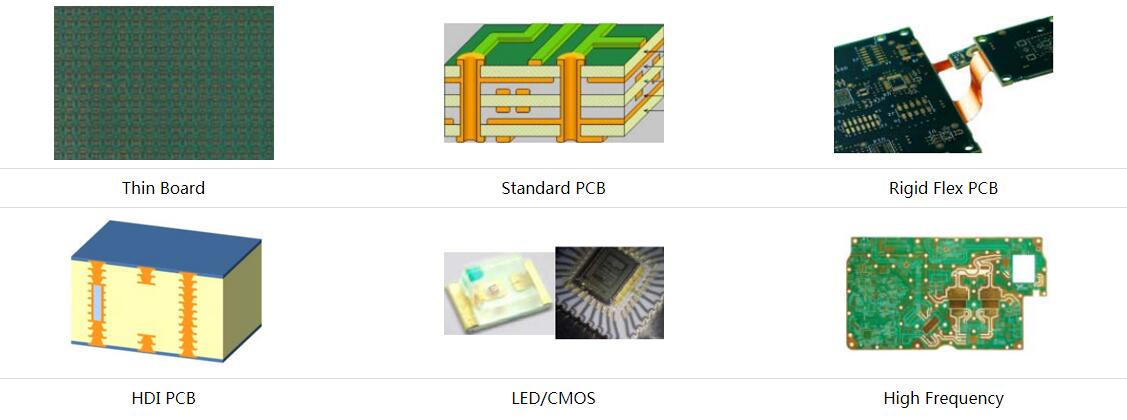
Wintech provides PCB design and manufacturing support covering multilayer rigid PCBs, high-density interconnect (HDI) PCBs, microvia, Every Layer Interconnect (ELIC), RF boards, flexible printed circuits, rigid-flex circuits, and semi-flex PCBs.
Its manufacturing scope includes 2–70 layer PCBs, prototype production, quick-turn manufacturing, and mass production. These capabilities support projects with different board structures, technical requirements, and production volumes.
Integrated Manufacturing and Procurement Coordination
When PCB fabrication and component sourcing are managed as connected activities, production planning becomes easier to coordinate.
For example, the PCB manufacturing schedule can be evaluated alongside critical component lead times. If a specialized IC is delayed, the team can review whether fabrication should proceed, whether an alternative is feasible, or whether the production sequence should be adjusted.
Wintech's supply chain service provides a relevant starting point for OEMs evaluating procurement coordination and material management.
Why Manufacturing Capability Matters in Sourcing Decisions
An EMS provider should understand the relationship between component selection and actual manufacturing requirements.
A substitute component may require a different PCB footprint, thermal design, assembly process, soldering profile, or inspection approach. Without manufacturing knowledge, a purchasing decision can introduce problems that are only discovered during production.
For complex projects, it is useful to work with a provider that can coordinate PCB fabrication, design review, assembly, and procurement rather than treating them as unrelated services.
Prototype-to-Mass-Production Planning
Component sourcing strategies should evolve as a product moves from prototype to volume manufacturing.
During prototyping, purchasing smaller quantities and testing alternative components may be practical. During mass production, the focus shifts toward repeatable sourcing, volume pricing, approved suppliers, inventory planning, and consistent traceability.
Wintech supports manufacturing quantities ranging from prototypes to mass production, allowing customers to evaluate production requirements across different stages of product development.
Choosing Wintech for Your Manufacturing Project
Before selecting an EMS partner, OEMs should discuss their BOM, expected production volumes, technical requirements, sourcing constraints, and delivery expectations.
Review the Wintech company profile and its manufacturing capabilities to understand the company's service scope.
For project-specific requirements, including PCB fabrication, assembly, component procurement, and production planning, contact Wintech to discuss the technical and commercial details.
10. Common Mistakes OEMs Make When Evaluating EMS Sourcing Risk Management
Mistake 1: Selecting an EMS Provider Based Only on the Lowest Quotation
A low quotation may exclude important sourcing controls, inspection requirements, or inventory commitments.
Compare total landed cost, material traceability, procurement transparency, and delivery reliability instead of focusing only on the initial price.
Mistake 2: Assuming Every Component Has an Equivalent Alternative
Some passive components have multiple potential substitutes. Specialized ICs and processors may have unique functions, firmware requirements, and electrical characteristics.
OEMs should ask for a technical justification and approval process before accepting replacements.
Mistake 3: Waiting Until a Shortage Occurs
Reactive sourcing often leads to premium pricing and limited technical choices.
Critical BOM items should be reviewed during product development and before production forecasts become firm.
Mistake 4: Ignoring Component Lifecycle Information
A component that is available today may be approaching end-of-life. Long-term products need lifecycle monitoring and replacement planning.
Mistake 5: Treating All Suppliers as Equally Reliable
Supplier availability does not prove supplier quality. Evaluate provenance, documentation, performance, and corrective action capability.
Mistake 6: Allowing Procurement to Make Engineering Decisions
Procurement teams can identify alternatives and negotiate availability, but technical approval should remain with the responsible engineering authority and customer where required.
Mistake 7: Holding Too Much Inventory Without a Demand Plan
Excess purchasing can create financial and obsolescence exposure. Inventory should be linked to realistic production demand and component lifecycle considerations.
11. Expert Recommendations: Building a More Resilient EMS Sourcing Strategy
For OEMs that depend on consistent electronic manufacturing, we recommend treating sourcing risk as a measurable part of supplier performance.
For New Product Development
- Review component lifecycle status during BOM development.
- Avoid unnecessary dependence on single-source components where practical.
- Consider alternative components before PCB layout is finalized.
- Review package, footprint, thermal, and electrical compatibility.
- Discuss long-lead-time components with the EMS provider before prototype and production milestones.
For Prototype Manufacturing
Prioritize component authenticity, engineering compatibility, and rapid problem resolution. Do not purchase questionable components simply to meet a prototype deadline.
Prototype manufacturing is an opportunity to identify sourcing weaknesses before the product enters volume production.
For Mass Production
- Establish an approved vendor and component list.
- Agree on forecast sharing and material purchasing responsibilities.
- Identify critical components requiring strategic inventory.
- Define customer approval requirements for substitutions.
- Maintain traceability and production batch records.
- Review supplier performance and component availability regularly.
For Long-Lifecycle Industrial Products
Industrial products may remain in production long after some electronic components have become obsolete.
For these programs, lifecycle monitoring, last-time-buy planning, second-source qualification, and controlled redesign strategies deserve greater attention.
Recommended EMS Supplier Evaluation Checklist
- Does the EMS provider perform BOM risk analysis?
- Does it prioritize authorized component sourcing?
- Can it explain its independent distributor verification process?
- Does it monitor lead times and component lifecycle status?
- Can it identify and technically evaluate alternative components?
- Are component substitutions subject to documented approval?
- Does it maintain purchasing and material traceability?
- Can it coordinate PCB fabrication and assembly schedules with material availability?
- Does it provide transparent shortage and delivery communication?
- Can it demonstrate relevant quality management and inspection controls?
If an EMS provider cannot clearly explain these processes, OEMs should investigate further before committing a high-value or long-term manufacturing program.
12. Frequently Asked Questions About Electronic Component Sourcing Risks
1. How do EMS providers manage electronic component sourcing risks?
EMS providers manage sourcing risks through BOM analysis, supplier qualification, authorized distribution, component lifecycle monitoring, inventory planning, alternative component validation, incoming inspection, and supply chain contingency planning. Engineering, procurement, and quality teams should work together to protect production continuity.
2. What are the biggest risks in electronic component sourcing?
The major risks include component shortages, counterfeit parts, price volatility, obsolescence, single-source dependency, supplier quality problems, logistics disruptions, and unauthorized component substitutions. Their impact depends on the component's importance and the product's manufacturing requirements.
3. Why do EMS providers prefer authorized electronic component distributors?
Authorized distributors generally provide stronger purchasing provenance, traceability, and manufacturer-backed supply channels. These benefits help reduce counterfeit exposure and simplify material documentation. However, supplier and incoming quality controls are still necessary.
4. How do EMS providers prevent counterfeit electronic components?
They prioritize authorized sourcing, qualify suppliers, retain purchasing records, inspect incoming materials, and apply additional verification or testing when sourcing risks justify it. For independent-source components, the verification process should be more rigorous.
5. What is BOM risk analysis in electronics manufacturing?
BOM risk analysis evaluates each component's availability, lifecycle status, lead time, supplier dependency, price, traceability, and alternative sourcing options. It helps identify components that could delay production or create quality and cost problems.
6. Should an EMS provider maintain alternative electronic components?
Yes, where technically and commercially practical. Alternative components can improve supply flexibility, especially for single-source or constrained parts. However, substitutes must undergo appropriate engineering review and customer approval before production use.
7. What is the difference between authorized and independent component sourcing?
Authorized sourcing uses manufacturer-approved distribution channels and generally offers stronger traceability. Independent sourcing obtains components through other market channels and can help locate constrained or obsolete parts, but requires additional supplier and authenticity verification.
8. How can component shortages affect PCB assembly lead times?
A shortage of even one critical BOM item can prevent completion of an assembly order. The EMS provider may need to wait for replenishment, obtain an approved alternative, or reschedule production. This is why material availability should be reviewed before confirming the manufacturing schedule. See our PCB assembly lead time guide for additional planning considerations.
9. How should OEMs choose an EMS provider for component sourcing?
Evaluate the provider's supplier qualification process, sourcing transparency, BOM analysis capabilities, engineering support, material traceability, incoming inspection, shortage communication, and manufacturing integration. Ask for evidence of the actual process rather than relying on general purchasing claims.
10. Is supply chain risk management worth the additional EMS cost?
For recurring production, high-value BOMs, long-lifecycle products, and applications with critical delivery commitments, structured sourcing risk management can prevent expensive disruptions. For simple prototypes using readily available components, a lighter approach may be sufficient.
13. Authoritative References and Industry Standards
The following resources provide recognized guidance relevant to electronic component authenticity, counterfeit risk mitigation, and quality management in electronic manufacturing.
-
SAE International – AS5553: Counterfeit Electrical, Electronic, and Electromechanical Parts; Avoidance, Detection, Mitigation, and Disposition.
This industry standard provides a framework for managing counterfeit-part risks throughout the supply chain, including purchasing controls, detection, reporting, and disposition.
Read SAE AS5553 Standard Information -
International Organization for Standardization – ISO 9001: Quality Management Systems.
ISO 9001 establishes requirements for quality management systems, including supplier control, process management, documented information, and corrective action. It is relevant to evaluating an EMS provider's quality management framework.
Read ISO 9001 Standard Information -
U.S. Government Accountability Office – Defense Supply Chain and Counterfeit Electronic Parts Oversight.
GAO reports provide government oversight perspectives on counterfeit electronic parts, supply chain vulnerabilities, and procurement controls. These findings are useful background for understanding why sourcing traceability and supplier oversight matter.
Explore GAO Counterfeit Electronic Parts Reports
Final Thoughts: Choose an EMS Provider That Controls Sourcing Risk Before It Becomes a Production Problem
Electronic component sourcing risks cannot be eliminated entirely. Semiconductor availability changes, suppliers revise product lifecycles, logistics conditions fluctuate, and technical requirements evolve. What separates a reliable EMS provider from a basic assembly supplier is the ability to identify these problems early and manage them through a controlled process.
For OEMs, the strongest sourcing strategy combines engineering-led BOM analysis, qualified suppliers, traceable purchasing, realistic inventory planning, approved alternative components, and transparent production communication.
Wintech integrates PCB manufacturing and assembly capabilities with supply chain support, helping customers coordinate material requirements with manufacturing plans. For projects involving multilayer rigid PCBs, HDI, RF, rigid-flex, flexible circuits, prototypes, or mass production, early coordination can help identify material risks before they affect delivery.
Our final recommendation: Do not evaluate an EMS provider only by how cheaply it can purchase components. Evaluate how well it can protect your product quality, production schedule, and long-term supply continuity.
To discuss your PCB manufacturing and component sourcing requirements, visit Wintech's contact page.


